Soups & stews / Chowders & creamy soups
Roasted Butternut Squash Soup with Apple
Not rated yet. Be the first.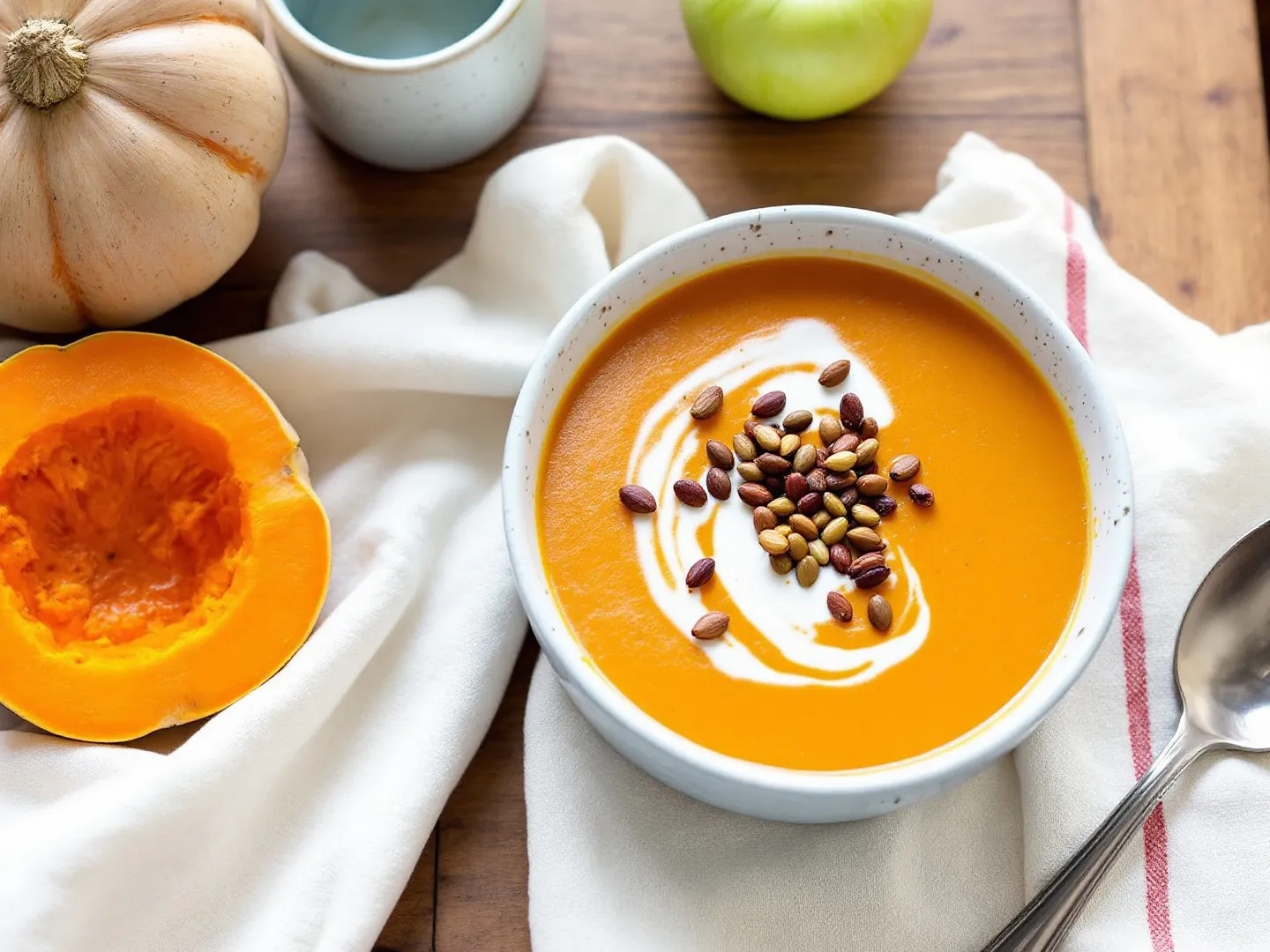
Squash, apple and shallots roast in one pan until the edges go dark and sweet, and the kitchen smells like October. Blend it, stir in a spoon of maple, and carry the pot to the table with both hands.
The short version
Roast cubed squash, apple and shallots at 425°F for 40 to 45 minutes until browned, blend with broth, then warm it with a spoon of maple syrup, a splash of cider vinegar and cream if you like. Roast for color, not just softness.
What makes ours better
why ours wins the argument at dinner
-
Roast everything first. Boiled squash tastes like squash water. Roasting browns the edges and concentrates the sugar, which gives the soup a deep, toasty sweetness without any extra work.
-
Roast an apple and shallots in the same pan. The apple adds fruitiness and a little tartness that keeps the soup from being flat and heavy; shallots are sweeter and gentler than onion and melt right into it.
-
Finish with maple and cider vinegar. A tablespoon of maple deepens the roasted flavor, and a teaspoon of vinegar wakes it all up. Taste before and after; the vinegar is the step that makes people ask what's in it.
What you need
the stars of the show
- Butternut squash3 pounds
- Tart-sweet apple1 large
- Shallots3 medium
- Olive oil3 tablespoons
- Low-sodium chicken or vegetable broth4 cups
- Maple syrup1 tablespoon
- Apple cider vinegar1 teaspoon
- Ground nutmeg⅛ teaspoon
read it twice. buy it once.
Steps
apron on. phone down. mostly.
-
Heat the oven
Set a rack in the center of the oven and heat it to 425°F. Line a large rimmed baking sheet with foil or parchment.
-
Roast the vegetables
Toss the squash, apple and shallots with the olive oil, salt and pepper right on the pan and spread them in a single layer with a little space between pieces. Roast, stirring once halfway through, until the squash is completely tender and browned at the edges, 40 to 45 minutes.
A crowded pan steams instead of browns. If it's packed edge to edge, use two pans.
About 40 min. Cook mode has a timer for this step.
-
Scrape up the browned bits
Pour about ½ cup of the broth onto the hot pan and scrape up the browned, sticky bits with a spatula. Tip the vegetables and all the liquid into a large pot.
-
Simmer briefly
Add the rest of the 4 cups of broth and bring it to a simmer over medium heat. Simmer 5 minutes so everything is hot through, then take it off the heat.
About 5 min. Cook mode has a timer for this step.
-
Blend safely
Blend with an immersion blender right in the pot until silky smooth. For a regular blender, work in batches and fill the jar no more than halfway. Remove the center cap from the lid, hold a folded towel over the opening, and start on low before turning it up. Pour each batch back into the pot.
Hot soup in a sealed, full blender jar can blow the lid off. Half full, vent open, towel on top.
-
Season and finish
Over low heat, stir in the maple syrup, vinegar and nutmeg, and the cream or butter if using. Add water or broth, about ½ cup at a time, until it's as thick as you like. Taste and add salt until the flavor pops; squash soup usually needs more than you'd think.
-
Serve
Ladle into warm bowls. Finish with a drizzle of cream and a scatter of toasted pepitas, or a few twists of black pepper.
Good to know
the stuff I’d tell you over the phone
- Pick a heavy squash with matte, beige skin and no green streaks. To peel it easily, microwave it whole for 2 to 3 minutes, cut off both ends and use a sharp vegetable peeler.
- Dairy-free: skip the cream, finish with a tablespoon of good olive oil, or use ⅓ cup canned coconut milk.
- Spice it up: toss the squash with 1 teaspoon curry powder or ½ teaspoon ground cumin before roasting, or fry a few sage leaves in butter for garnish.
- Make ahead: the soup is better on day 2. Make it through blending up to 3 days ahead, then finish and season when you reheat it.
- Storage. Covered in the fridge, 4 days. Freeze (before adding cream) up to 3 months; thaw overnight in the fridge. Reheat over medium-low, stirring, and thin with a splash of water.
Questions, answered
asked and answered at the kitchen counter
Do I have to roast the squash for butternut squash soup?
No, but it's the reason this soup tastes the way it does. Simmered squash gives a cleaner, milder soup; roasted squash gives a deeper, caramelized one for the same amount of work.
Can I make butternut squash soup without cream?
Yes. Roasted squash blends up velvety on its own. Finish it with butter, olive oil or coconut milk, or nothing at all.
Why does my butternut squash soup taste bland?
It needs salt and acid. Add salt a pinch at a time and a few more drops of cider vinegar until the flavor brightens. Under-roasted, pale squash also tastes flat, so roast until you see real browning.
How do I make my soup thicker or thinner?
To thin it, add water or broth a little at a time. To thicken it, simmer it uncovered for 10 to 15 minutes, stirring so it doesn't catch on the bottom.
Can I use pre-cut or frozen butternut squash?
Yes. Pre-cut fresh squash roasts the same way; use about 2½ pounds. Frozen cubes release water and won't brown as well, so roast them at the same heat on two pans and expect a milder soup.
Can I freeze butternut squash soup?
Yes, for up to 3 months. Freeze it before adding cream, which can separate when thawed, and stir in the cream when you reheat it.
From the table
Made it? Tell me everything. Especially if somebody said it was better than their mother’s. I’ll keep your secret.
Made it?
stars first, story second. I read every one.
Tap a star
- No reviews yet. Yours would be the first, and I’d read it twice.
Find it in
Published October 26, 2026.