Pan-Seared Duck Breast with Orange Pan Sauce
Not rated yet. Be the first.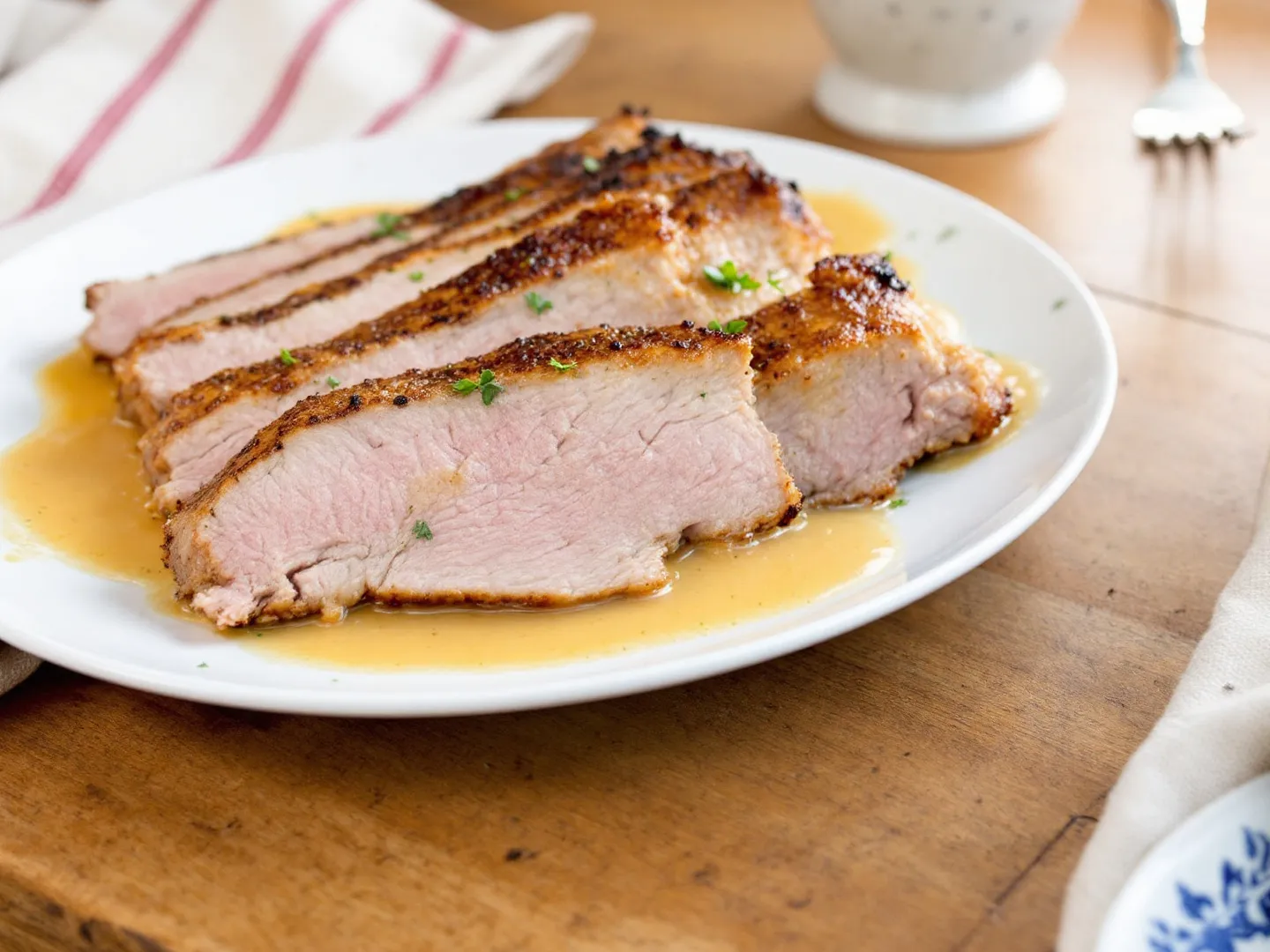
Skin that shatters under the fork, a rosy middle, and a quick orange sauce made in the same pan. Start in a cold skillet, go slow, and a Thursday feels like an anniversary.
The short version
Score the skin, salt it, and start the duck skin side down in a cold skillet. Cook over medium-low 12 to 15 minutes while the fat melts out, flip for 2 to 4 minutes to 130°F, and rest 8 minutes. Make a quick orange sauce in the same pan.
What makes ours better
small changes, very loud compliments
-
Start in a cold pan. A cold start melts the fat slowly, so the skin crisps all the way through and the meat doesn't overcook. A hot pan seals the skin and leaves the fat trapped under it.
-
Pour off the fat as it renders. The skin fries instead of sitting in a pool. Save the fat. It makes wonderful roast potatoes.
-
Score the skin and dry it well. Cuts help the fat escape and keep the skin from curling. Dry skin crisps. Wet skin steams.
-
Make the sauce in the same pan. The browned bits and a spoon of duck fat are the base of a sauce that takes five minutes. Orange and vinegar balance the rich meat.
What you need
check the pantry before you promise anyone
- Boneless duck breasts2 large
- Shallot1 large
- Balsamic vinegar2 tablespoons
- Chicken broth½ cup
- Honey1 teaspoon
- Cold unsalted butter1 tablespoon
Duck
Orange pan sauce
read it twice. buy it once.
Steps
go slow. the good part can’t be rushed.
-
Dry and score the skin
Pat the duck very dry with paper towels. With a sharp knife, cut the skin and fat in a crosshatch pattern about ½ inch apart. Cut through the fat but not into the meat. If you have time, leave it uncovered in the fridge for an hour.
-
Salt the duck
Take the duck out of the fridge 20 minutes before cooking. Sprinkle the salt and pepper over both sides, working it into the cuts.
-
Start in a cold pan
Lay the breasts skin side down in a cold, 12-inch skillet. Set it over medium-low heat. In a few minutes the fat will start to melt and sizzle softly.
-
Render the fat
Cook 12 to 15 minutes. As fat pools in the pan, spoon it off into a heatproof bowl every few minutes. Lower the heat if the fat spits. The skin is ready when it is deep golden brown and crisp.
If the skin is browning before the fat melts, the heat is too high. Turn it down.
About 14 min. Cook mode has a timer for this step.
-
Flip and finish
Raise the heat to medium. Turn the breasts over and cook 2 to 4 minutes, until an instant-read thermometer in the thickest part reads 130°F for medium-rare or 140°F for medium. Thick breasts may need to finish in a 400°F oven for 4 to 6 minutes.
About 3 min. Cook mode has a timer for this step.
-
Rest
Move the duck to a cutting board, skin side up. Rest 8 minutes, uncovered, so the skin stays crisp. The temperature will rise a few degrees.
About 8 min. Cook mode has a timer for this step.
-
Make the pan sauce
Pour off all but 1 tablespoon of fat from the skillet. Add the shallot and cook over medium heat 1 minute. Add the orange juice, vinegar, broth and honey. Scrape up the browned bits and boil 4 to 5 minutes until syrupy. Off the heat, stir in the butter and thyme. Taste for salt.
About 5 min. Cook mode has a timer for this step.
-
Slice and serve
Slice the duck across the grain, about ¼ inch thick, skin side up. Spoon the sauce around it.
Good to know
things I learned the hard way, so you can skip that part
- Pekin and Muscovy breasts both work. Large Moulard (magret) breasts are thicker and may need the oven finish.
- Keep the rendered fat in a jar in the fridge for 3 months. Use it for potatoes, eggs or vegetables.
- Don't slice the duck until after it rests. Cut early and the juices run out onto the board.
- Storage. Refrigerate sliced duck up to 3 days. Reheat gently in a 300°F oven for 8 to 10 minutes, or eat cold on salad. The sauce keeps 3 days.
Questions, answered
asked and answered at the kitchen counter
What temperature should duck breast be?
130°F for medium-rare and 140°F for medium, taken after resting. Duck breast is red meat in texture and is best served pink. A pink middle is safe when the duck is fresh and properly handled.
Why start duck breast in a cold pan?
A cold pan melts the fat slowly, so the skin gets crisp and the meat stays tender. A hot pan sears the skin before the fat has a chance to render.
How do I get crispy duck skin?
Dry it very well, score it, salt it, and cook it skin side down over medium-low heat until the fat has rendered. Spooning off fat as it melts helps.
Do I need to score duck breast?
Yes. Scoring lets the fat escape and stops the skin from shrinking and curling. Don't cut into the meat.
How long does it take to cook duck breast?
About 15 to 20 minutes in total, most of it skin side down. Thick breasts take longer.
Can I cook duck breast in the oven?
Start it in the skillet to render the fat and brown the skin, then finish in a 400°F oven if the breast is thick. An oven alone won't crisp the skin.
From the table
Made it? I want the full report: first bite, best compliment, and who tried to take the leftovers home.
Made it?
tell me the truth, then tell me who had thirds
Tap a star
- No reviews yet. Yours would be the first, and I’d read it twice.
Find it in
Published October 29, 2026.