Foolproof Poached Eggs
Not rated yet. Be the first.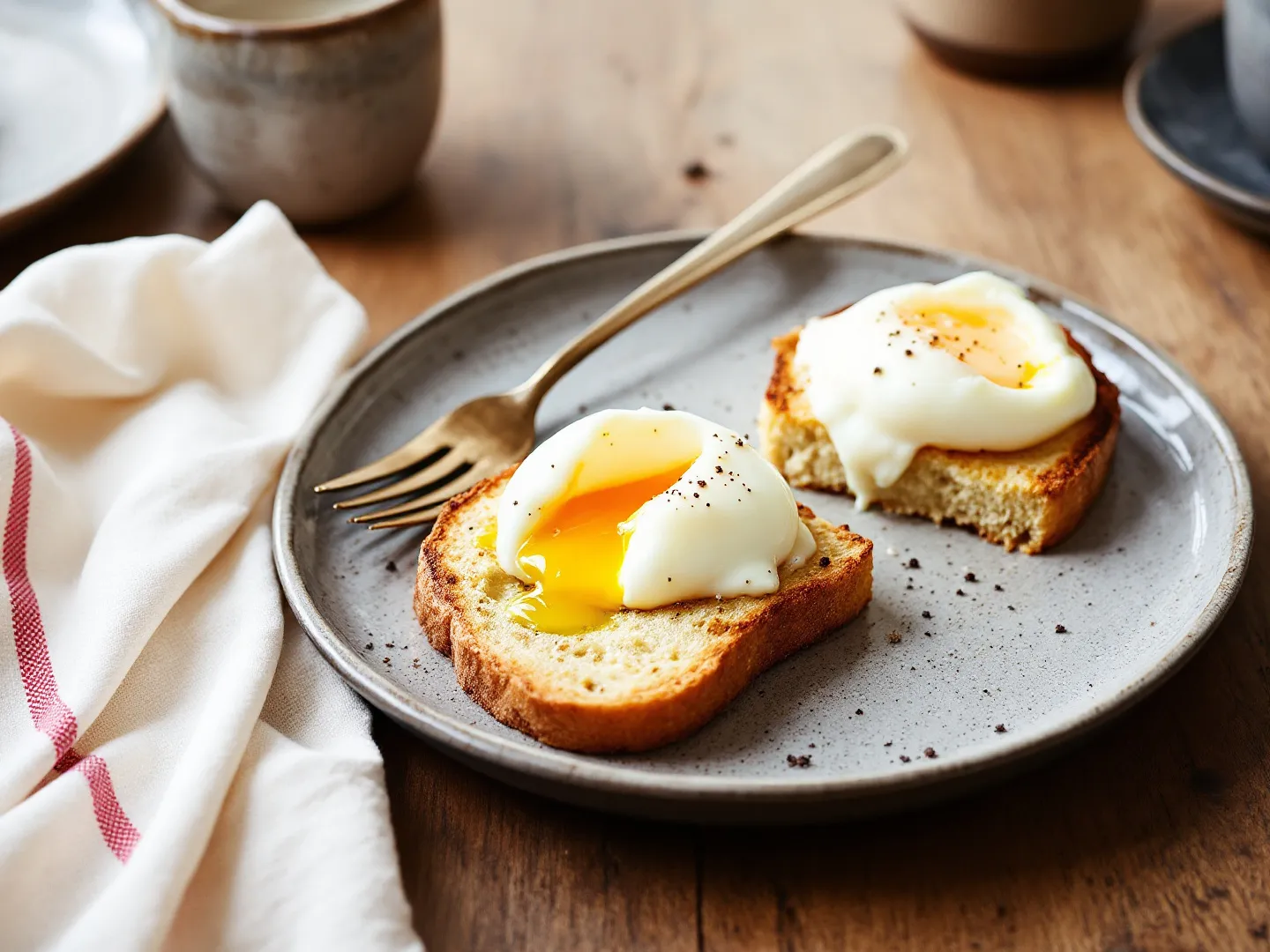
Strain the egg, slide it into barely simmering water, then cover the pan and turn off the heat. Four to six quiet minutes later you have a tidy white and a runny yolk, the kind you carry to whoever is still in bed.
The short version
Strain each egg to drain the watery white, slide it into a skillet of barely simmering water with a splash of vinegar, then cover and take the pan off the heat for 4 to 6 minutes. Lift out, drain and serve.
What makes ours better
small changes, very loud compliments
-
Strain the egg first. The thin, watery part of the white is what spreads into wispy ragged strands in the water. Shake the egg in a fine strainer and it holds together in a neat oval.
-
Cover the pan and turn off the heat. The water holds enough heat to cook the egg gently, with no bubbles to batter it and no timing panic. It is the forgiving way to do it.
-
Add a splash of vinegar. A little acid helps the white set faster and tighter. Use it if you like the neat look, and skip it if you don't.
yes, all of the butter
Steps
apron on. phone down. mostly.
-
Heat the water
Fill a 10-inch skillet or wide pot with about 2 inches of water. Add the vinegar if using. Bring to a brisk simmer, then lower the heat until the surface is barely trembling with just a few small bubbles.
-
Strain the eggs
Crack one egg into a fine-mesh strainer set over a bowl and give it a gentle shake until the loose, watery white drains off. Slide the egg into a small cup or ramekin. Repeat with the other eggs, each in its own cup.
Skip this and the eggs still taste fine. They just look ragged.
-
Slide in the eggs
Bring the lip of a cup just above the water and slide one egg in gently. Do the same with the rest, spacing them apart. The whites will turn opaque right away.
-
Cover and take off the heat
Cover the pan, remove it from the heat and let it sit until the whites are set and the yolks are still soft, 4 to 6 minutes. A gentle poke should feel firm on the outside and wobbly in the middle.
About 5 min. Cook mode has a timer for this step.
-
Drain and serve
Lift the eggs out with a slotted spoon and set them on a clean towel for a few seconds to drain. Season with the salt and pepper and serve right away.
A slightly underdone egg beats an overdone one. The yolk is meant to run.
Good to know
things I learned the hard way, so you can skip that part
- Fresh eggs have thick whites and poach best. If yours are old, the straining step matters even more.
- To make ahead, transfer the poached eggs to a bowl of cold water the moment they are done and refrigerate up to 24 hours. To reheat, slip them into warm, not boiling, water for about a minute, then drain.
- For a crowd, hold cooked eggs in a wide bowl of 150°F water, covered, for up to 30 minutes.
- Storage. Poached eggs are best fresh. Store cooked eggs in cold water in the fridge up to 24 hours and rewarm gently in warm water.
Questions, answered
asked and answered at the kitchen counter
How do I poach an egg without it falling apart?
Strain off the thin white in a fine-mesh strainer, use a gentle simmer instead of a boil, and slide the egg in close to the surface of the water.
Do I need vinegar to poach eggs?
No. It tightens the white a little, but a strained fresh egg poaches fine without it.
How long does it take to poach an egg?
4 to 6 minutes covered and off the heat gives a set white and a runny yolk. If you keep the pan at a gentle simmer, it takes about 3 minutes.
Can I poach eggs ahead of time?
Yes. Move them to cold water as soon as they're done, refrigerate up to 24 hours, then warm them in hot (not boiling) water for about a minute before serving.
Why are my poached eggs stringy?
The water was too hot, or the egg wasn't fresh, or you skipped the strainer. Drain the thin white and keep the water barely moving.
From the table
Made it? I want the full report: first bite, best compliment, and who tried to take the leftovers home.
Made it?
tell me the truth, then tell me who had thirds
Tap a star
- No reviews yet. Yours would be the first, and I’d read it twice.
Find it in
Published October 29, 2026.