Roasted Chicken Stock
Not rated yet. Be the first.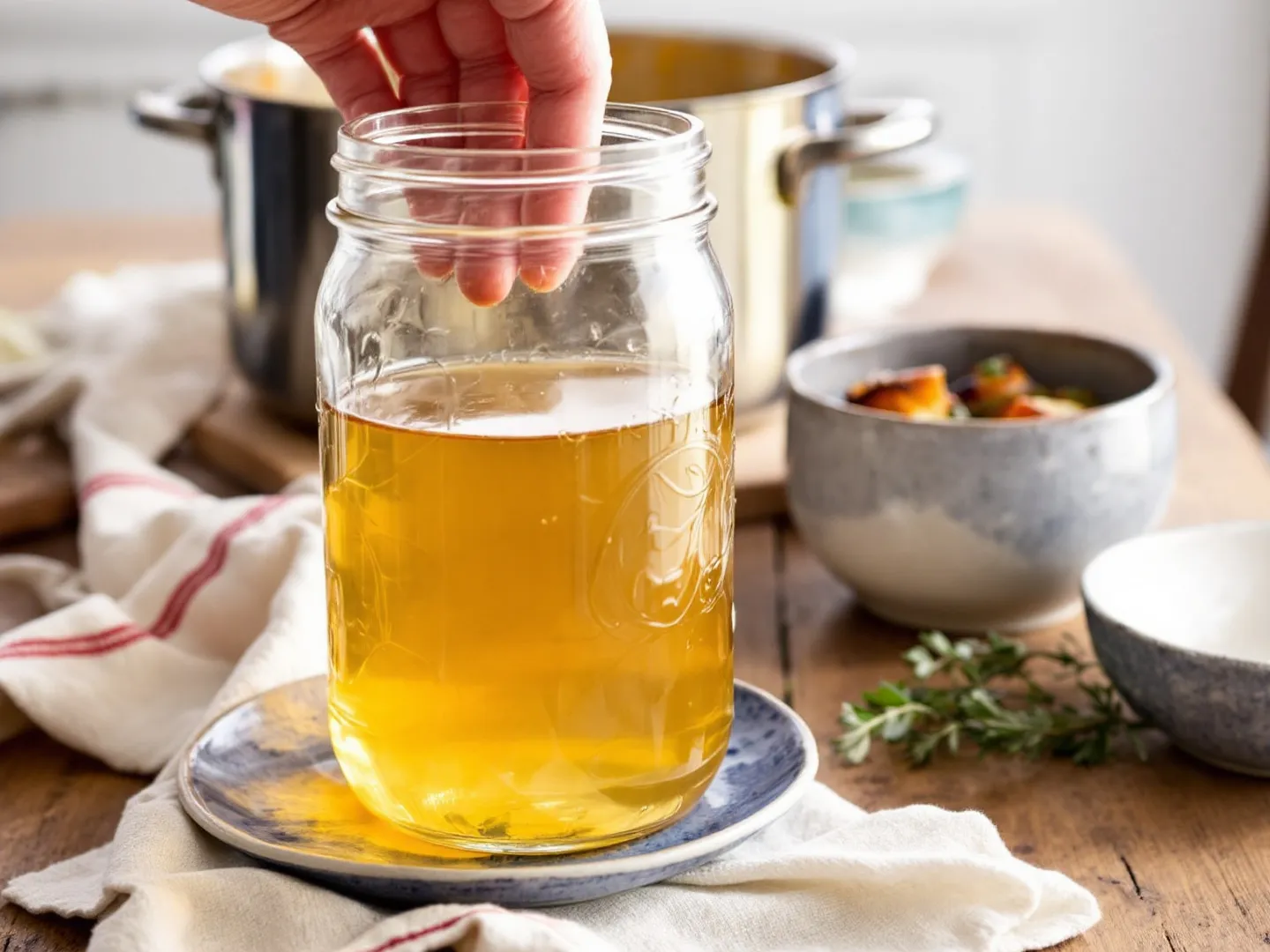
Bones roasted until they're deep brown, then cold water and three hours at a bare simmer while the house smells like every good Sunday at once. Chill it overnight and it sets like soft jelly, which is exactly right.
The short version
Roast chicken backs and wings at 425°F until browned, cover with cold water and vegetables, and simmer gently for 3 hours. Strain, chill overnight, and lift off the fat. Don't let it boil hard and don't salt it.
What makes ours better
what we fixed so you don’t have to
-
Roast the bones first. Forty minutes in a hot oven browns the chicken and builds a deep, savory flavor and golden color you can't get from simmering raw bones.
-
Use backs, necks and wings. Joints and skin are full of collagen, which turns to gelatin as the stock cools. That's the body in your soup.
-
Start with cold water and keep it at a bare simmer. Cold water draws proteins out slowly so they can be skimmed off. A hard boil clouds the stock and makes it taste muddy.
-
Leave the onion skin on and skip the salt. The skin gives the stock a rich amber color. With no salt, you can reduce it or season each dish to taste.
What you need
the usual suspects
- Chicken backs4 pounds
- Yellow onion1 large
- Carrots2 medium
- Celery2 rib
- Fresh parsley4 sprigs
- Fresh thyme3 sprigs
- Bay leaf1 large
yes, all of the butter
Steps
nobody opens the oven door. looking at you, Dad.
-
Heat the oven
Set a rack in the lower third of the oven and heat it to 425°F.
-
Roast the chicken
Toss the chicken parts with the oil on a large rimmed baking sheet, spreading them in a single layer. Roast for 20 minutes, then add the onion, carrots and celery to the pan and roast until the chicken is deeply browned, about 20 minutes more.
Browned, not burnt. Dark mahogany edges are good; black ones taste bitter.
About 40 min. Cook mode has a timer for this step.
-
Move it to the pot
Transfer everything to a large stockpot (at least 8 quarts). Pour off the fat from the pan. Add a cup of hot water to the pan and scrape up the browned bits, then pour that into the pot.
-
Add water and aromatics
Add the parsley, thyme, bay leaf and peppercorns. Pour in the cold water until everything is just covered.
-
Bring to a bare simmer
Set the pot over medium-high heat. When bubbles start to rise at the edges and the surface shivers, reduce the heat to low. Skim off the gray foam that rises in the first 30 minutes. You want a few lazy bubbles breaking the surface, never a rolling boil.
Boiling makes cloudy, greasy stock. If it's bubbling hard, turn it down.
-
Simmer for 3 hours
Simmer, partly covered, for 3 hours. Top up with hot water if the bones poke out. The stock is ready when it smells rich and savory, it tastes of chicken, and the liquid has darkened to deep gold.
About 180 min. Cook mode has a timer for this step.
-
Strain
Lift out the large solids with tongs. Pour the stock through a fine-mesh strainer into a large bowl or another pot. Don't press on the solids. Discard them.
-
Chill and skim
Cool the stock in an ice bath, stirring now and then, until lukewarm, then refrigerate overnight. Lift off the layer of fat that hardens on top. The stock underneath should be jiggly.
Good to know
the stuff I’d tell you over the phone
- Save bones. Keep roast chicken carcasses and wing tips in a bag in the freezer until you have about 4 pounds, and skip the roasting step in that case if they're already cooked.
- For a lighter, paler stock, skip the roasting step. Put the raw chicken in the pot, cover with cold water and start from step 4. The flavor is milder but clean.
- For a more concentrated stock, simmer it uncovered another 30 to 45 minutes after straining. Use it in place of boxed stock, or dilute to taste.
- Chicken feet or a couple of extra wings add more gelatin if your stock doesn't set.
- Storage. Refrigerate in covered jars for up to 4 days. Freeze in 1- or 2-cup containers, or in ice cube trays for small amounts, for up to 6 months. Leave an inch of room in the container for expansion.
Questions, answered
the questions my cousins text me
What's the difference between chicken stock and chicken broth?
Stock is made mostly from bones and has more gelatin, so it's richer and sets when chilled. Broth is made with more meat and is usually seasoned. You can use either in soups.
Why is my chicken stock cloudy?
It boiled. A hard boil breaks fat and proteins into tiny bits that cloud the liquid. Keep it at a bare simmer and skim early, and strain without pressing on the solids.
Why didn't my chicken stock gel?
There wasn't enough collagen, or there was too much water. Next time use more wings, backs and feet and less water, or simmer it uncovered at the end to reduce it. It's still good stock.
Can I make chicken stock in a slow cooker or pressure cooker?
Yes. In a slow cooker, cook on low for 10 to 12 hours. In a pressure cooker, cook at high pressure for 45 minutes, with a natural release. Cover with cold water and use less of it than a stockpot.
Can I use a whole chicken?
Yes, but remove the breasts once they're cooked, about 30 minutes in, for soup or salad, and return the carcass to the pot. A whole chicken makes a lighter stock than one made from only bones.
Why doesn't the recipe have salt?
Stock gets reduced and seasoned later. If you salt it now, it can end up too salty when you use it in a sauce or soup.
From the table
Made it? Tell me how it went, and who went back for seconds when they thought nobody was looking.
Made it?
one star means we talk. five means I tell Dad.
Tap a star
- No reviews yet. Yours would be the first, and I’d read it twice.
Find it in
Published October 29, 2026.