Buttermilk-Brined Fried Chicken
Not rated yet. Be the first.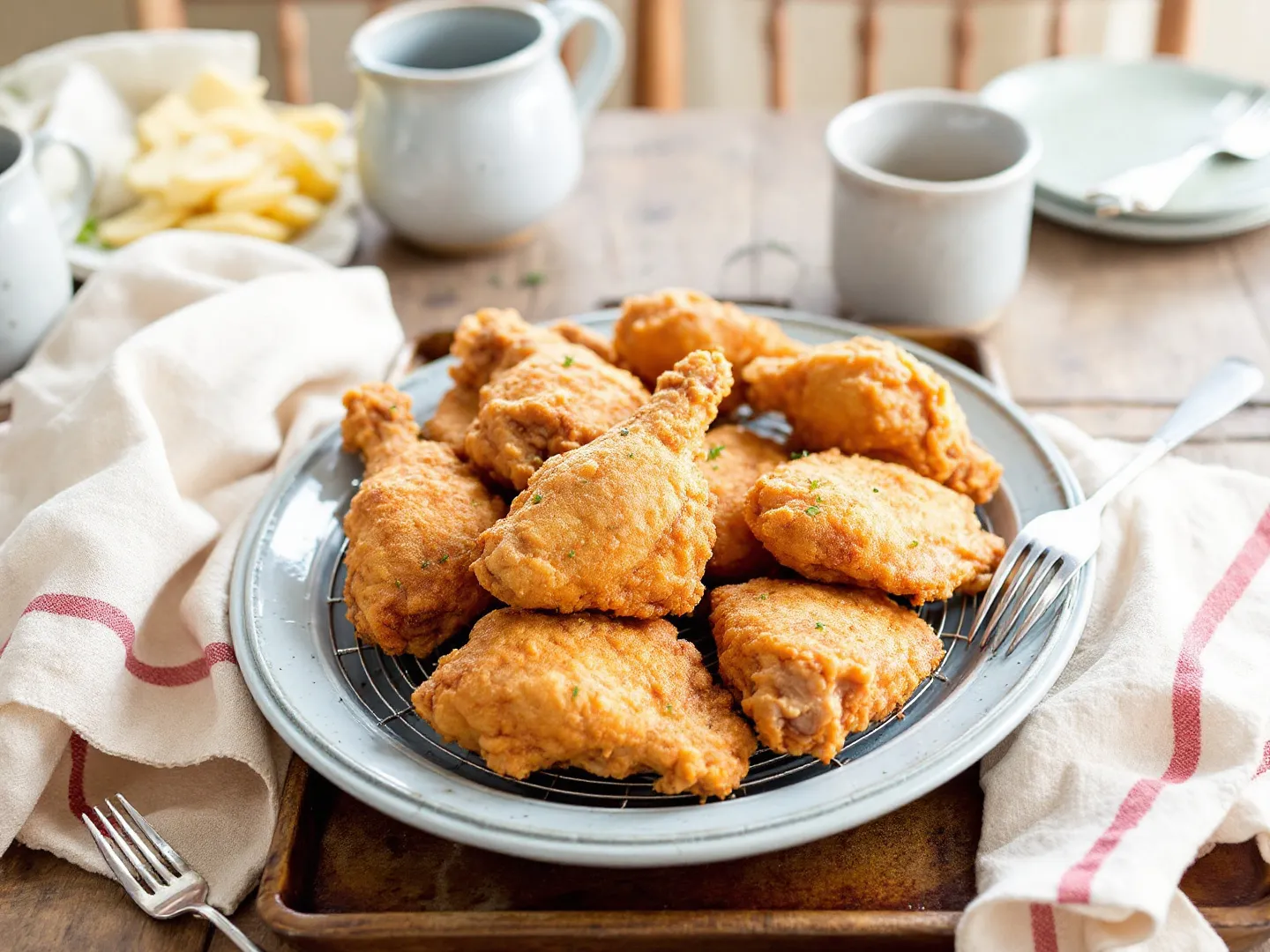
Overnight in buttermilk, then a coat of flour and cornstarch, then a cast-iron skillet and a crackle you can hear from the next room. Rest the chicken on a rack, and watch who sneaks the first piece.
The short version
Brine chicken pieces in salted buttermilk overnight, dredge in seasoned flour and cornstarch, rest 30 minutes, then fry in a cast-iron skillet, 5 minutes uncovered then covered, turning once, about 25 minutes total. Thighs hit 175°F, breasts 160°F. Rest on a rack, never paper towels.
What makes ours better
what we fixed so you don’t have to
-
Brine in salted buttermilk overnight. Salt seasons the meat all the way through and the buttermilk's acid tenderizes it, so even the breast stays juicy. A little sugar in the brine helps the crust brown.
-
Add cornstarch to the flour. Cornstarch fries up lighter and crunchier than flour alone, and that crisp holds for hours.
-
Rest the dredged chicken for 30 minutes. The flour hydrates and glues itself to the skin, so the crust stays on the chicken instead of in the oil.
-
Drain on a rack. Paper towels trap steam under the chicken and soften the bottom. A wire rack keeps every side crisp.
What you need
the usual suspects
- Buttermilk2 cups
- Sugar1 tablespoon
- Garlic3 cloves
- Bone-in chicken parts3½ pounds
- All-purpose flour1½ cups
- Paprika1 teaspoon
Brine
Crust and frying
read it twice. buy it once.
Steps
nobody opens the oven door. looking at you, Dad.
-
Brine the chicken
Whisk the buttermilk, salt, sugar, garlic and pepper in a large bowl or zip-top bag. Add the chicken, turn to coat, cover and refrigerate at least 8 hours and up to 24.
Salt does the work here, so don't skip it. Under 8 hours and the meat only seasons near the surface.
-
Mix the coating
Whisk the flour, cornstarch, salt, pepper, paprika, cayenne and garlic powder in a wide shallow dish. Set a wire rack over a baking sheet.
-
Dredge the chicken
Lift each piece from the brine, letting the excess drip off but leaving it wet. Press it into the flour mixture, turn it over and press again until fully covered, then shake off the loose flour. Put it on the rack.
-
Rest the coating
Let the chicken sit at room temperature for 30 minutes. The coating will look damp and patchy, which means it has stuck. Heat the oven to 200°F for holding the cooked pieces.
About 30 min. Cook mode has a timer for this step.
-
Heat the oil
Pour the oil into a 12-inch cast-iron skillet or deep heavy pan, about ¾ inch deep. Heat over medium-high to 325°F. A pinch of flour should sizzle right away.
A clip-on thermometer saves guesswork. Watch it, because the temperature drops when the chicken goes in.
-
Fry the first side
Lay in the thighs and drumsticks skin side down, in batches so they never touch. Fry uncovered 5 minutes, then cover with a lid and fry 7 to 10 minutes more, keeping the oil near 325°F. Lift the lid to check; the underside should be deep golden brown.
About 14 min. Cook mode has a timer for this step.
-
Turn and finish
Turn with tongs and fry the second side, uncovered, 10 to 12 minutes more. Breasts need about 8 to 10 minutes per side. Dark meat is done at 175°F and breast meat at 160°F; the juices run clear and the crust is deep mahogany.
About 11 min. Cook mode has a timer for this step.
-
Drain and hold
Move the chicken to a clean rack set over a baking sheet and keep it in the oven while you fry the rest. Let the last pieces sit 5 minutes before serving.
Good to know
read this before somebody asks for seconds
- Cut breasts into halves so every piece cooks in about the same time. Smaller pieces finish faster, so start with the dark meat.
- Use a heavy pan that holds heat. Cast iron is ideal; a thin pan swings in temperature and gives uneven color.
- Don't reuse the brine. Throw it out, and keep the raw chicken off anything that touches cooked pieces.
- Cooled oil can be strained and used again once for chicken.
- Storage. Refrigerate up to 3 days. Reheat on a rack in a 400°F oven for 15 to 20 minutes until hot and crisp. Not good in the microwave.
Questions, answered
the questions my cousins text me
How do I keep fried chicken crispy?
Rest the dredged chicken for 30 minutes before frying, fry at a steady 325°F, partly covered at the start, and drain on a wire rack instead of paper towels. Cornstarch in the coating helps it stay crisp.
How long does fried chicken take to cook?
Bone-in thighs and drumsticks take 20 to 24 minutes total in a skillet, and breast halves take 16 to 20. Go by temperature, not time, with 175°F for dark meat and 160°F for breasts (they coast to 165°F as they rest).
Why does the coating fall off my fried chicken?
The chicken needed a rest after dredging, or the pieces were moved too early. Let the coating hydrate for 30 minutes, then leave each piece alone for the first few minutes of frying.
Can I fry without buttermilk?
Yes. Thin plain yogurt with a little milk, or make a salt-and-water brine, though buttermilk gives the best tenderness and browning.
What oil is best for fried chicken?
Any neutral high-heat oil, such as peanut, canola or vegetable oil, works. Shortening or lard add richness and are traditional.
Can I make it ahead?
Brine and dredge-ready chicken can wait in the fridge up to 24 hours. Fried chicken is best fresh, but it reheats well in a hot oven on a rack.
From the table
Made it? Tell me everything. Especially if somebody said it was better than their mother’s. I’ll keep your secret.
Made it?
one star means we talk. five means I tell Dad.
Tap a star
- No reviews yet. Yours would be the first, and I’d read it twice.
Find it in
Published October 28, 2026.