Buttery Parker House Rolls
Not rated yet. Be the first.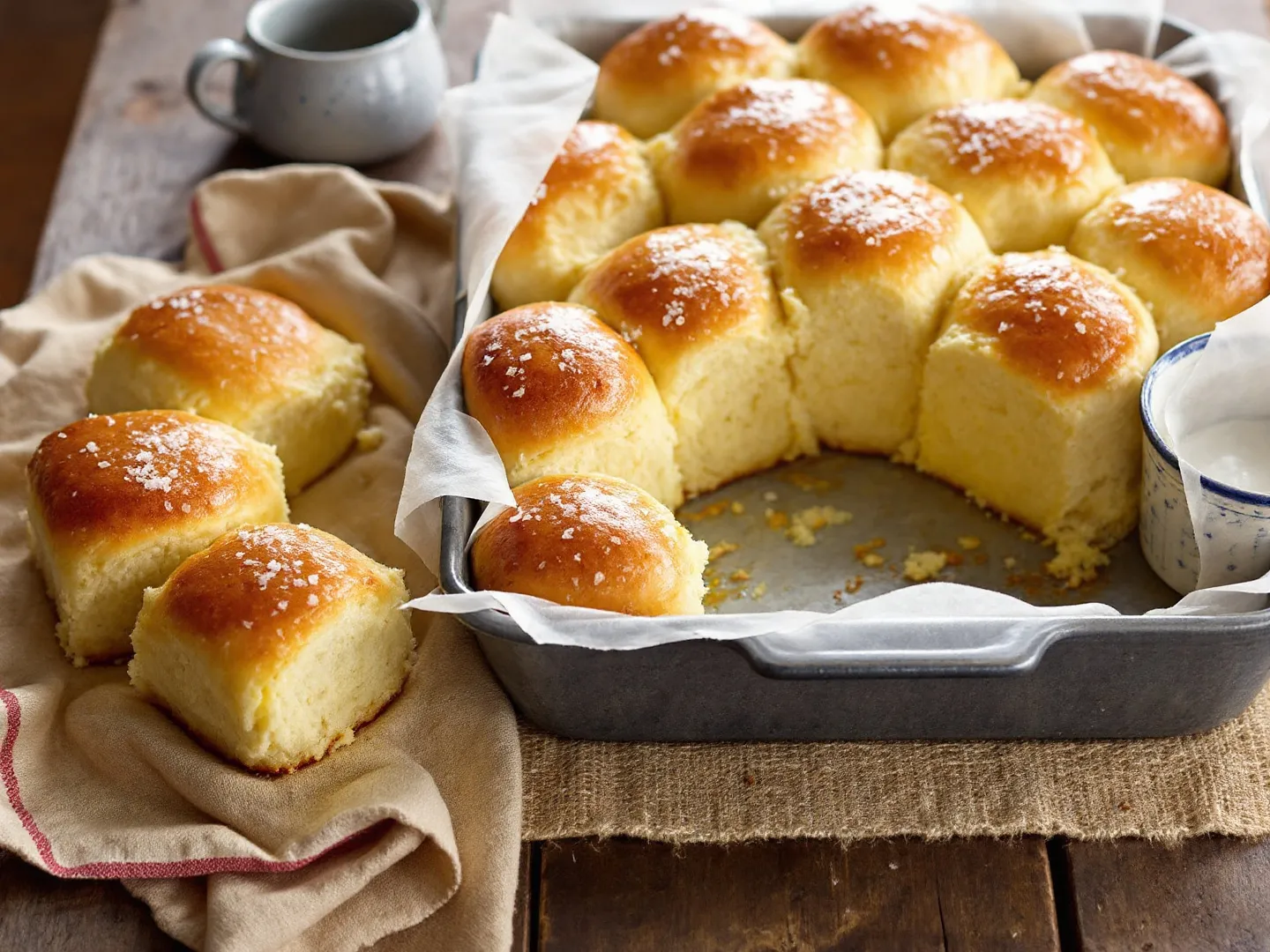
Steam rises when you tear one open, with a stripe of butter in the fold and a crunch of flaky salt on top. Twenty-four rolls sounds like plenty until the pan hits the table.
The short version
Mix a milk-and-egg dough, knead it smooth, let it rise for an hour, cut 24 pieces, butter and fold each one, rise again, then bake at 400°F for about 20 minutes. Brush with butter the second they come out, and don't skip the salt.
What makes ours better
small changes, very loud compliments
-
Butter inside every fold. A brush of melted butter before the fold makes each roll split into two soft layers, so you taste butter all the way through, not just on top.
-
Brush with butter and flaky salt when they come out. The hot rolls drink up the butter and the salt wakes up the sweet dough. It's the difference between a good roll and one people take seconds of.
-
Add a little more butter and sugar to the dough. Four tablespoons of butter and two of sugar give a tender, lightly sweet crumb that still works with gravy or a ham sandwich.
What you need
check the pantry before you promise anyone
- Whole milk1 cup
- Active dry yeast2¼ teaspoons
- Granulated sugar2 tablespoons
- Unsalted butter4 tablespoons
- Egg1 large
- All-purpose flour3½ cups
Dough
To finish
yes, all of the butter
Steps
apron on. phone down. mostly.
-
Wake the yeast
Whisk the warm milk, yeast and sugar in a large bowl or the bowl of a stand mixer. Let it sit 5 minutes, until a thin layer of foam covers the top.
If nothing foams, the yeast is old or the milk was too hot. Start over, because the dough will not rise.
About 5 min. Cook mode has a timer for this step.
-
Mix and knead
Add the softened butter, egg, salt and 3 cups of the flour. Stir until shaggy, then knead with the dough hook on medium-low for 8 minutes, or by hand on the counter for 10, working in the last ½ cup flour only as needed. The dough should be smooth, soft and slightly tacky, and spring back when poked.
Resist adding extra flour. A slightly tacky dough makes the softest rolls.
-
Let it rise
Put the dough in a lightly oiled bowl, turn it once to coat, and cover. Let it rise somewhere warm until doubled, 60 to 90 minutes.
About 60 min. Cook mode has a timer for this step.
-
Cut 24 pieces
Turn the dough onto a lightly floured counter and roll it into a log about 24 inches long. Cut it into 24 equal pieces, about 1 inch each. Roll each into a ball, then press into a round about 3 inches across. Butter a 9×13-inch pan.
-
Butter and fold
Brush each round with melted butter, using about 2 tablespoons in all. Dip the handle of a wooden spoon in flour and press a deep crease just off center, then fold the larger side over the smaller one and press the edge lightly. Set the rolls in the pan in 4 rows of 6, folded side up, with their sides touching.
-
Rise again
Cover the pan loosely and let the rolls puff up for 35 to 45 minutes. Heat the oven to 400°F with a rack in the middle while you wait. The rolls are ready when they look pillowy and press back slowly when poked.
About 40 min. Cook mode has a timer for this step.
-
Bake
Bake until deep golden on top, 18 to 22 minutes. Rolls in the center of the pan should look set, not pale, where they pull apart.
If the tops brown before the middle sets, tent the pan with foil for the last 5 minutes.
About 18 min. Cook mode has a timer for this step.
-
Brush and serve
Brush the hot rolls with the remaining melted butter, using about 2 tablespoons, and sprinkle with flaky salt. Serve warm, pulling them apart at the folds.
Good to know
read this before somebody asks for seconds
- Measure the flour by spooning it into the cup and leveling it, or weigh it (440 g). Packed flour makes dense rolls.
- To make ahead, shape and pan the rolls, cover tightly and refrigerate up to 12 hours. Let them sit at room temperature for 45 minutes, then bake.
- Instant yeast can go straight into the flour. Use the same amount and shorten both rises a little, going by how the dough looks.
- Storage. Cool completely and keep covered at room temperature up to 2 days. Freeze in a zip-top bag up to 3 months. Warm thawed rolls, wrapped in foil, at 325°F for 10 minutes.
Questions, answered
asked and answered at the kitchen counter
Can I make Parker House rolls ahead of time?
Yes. Shape them, pan them, and refrigerate covered up to 12 hours, then let them sit out 45 minutes before baking. You can also bake them fully a day ahead and rewarm wrapped in foil at 325°F.
Why are my dinner rolls dense?
Usually too much flour or too little rise. Spoon and level the flour, keep the dough slightly tacky, and let the rolls look puffy before they go in the oven.
How do I know when the dough has doubled?
Press a fingertip about ½ inch into the dough. If the dent fills back in slowly and not completely, it's ready. If it springs right back, wait longer.
Can I use instant yeast?
Yes, in the same amount. Mix it with the flour, then add the warm milk, and expect the rises to go a little faster.
Can I skip the egg?
You can, but the rolls will be a little paler and less tender. Replace it with 2 tablespoons of milk and expect a slightly firmer crumb.
From the table
Made it? Tell me everything. Especially if somebody said it was better than their mother’s. I’ll keep your secret.
Made it?
tell me the truth, then tell me who had thirds
Tap a star
- No reviews yet. Yours would be the first, and I’d read it twice.
Learn the technique
Find it in
Published October 29, 2026.