How to Work with Yeast Dough (Rise, Knead, Shape)
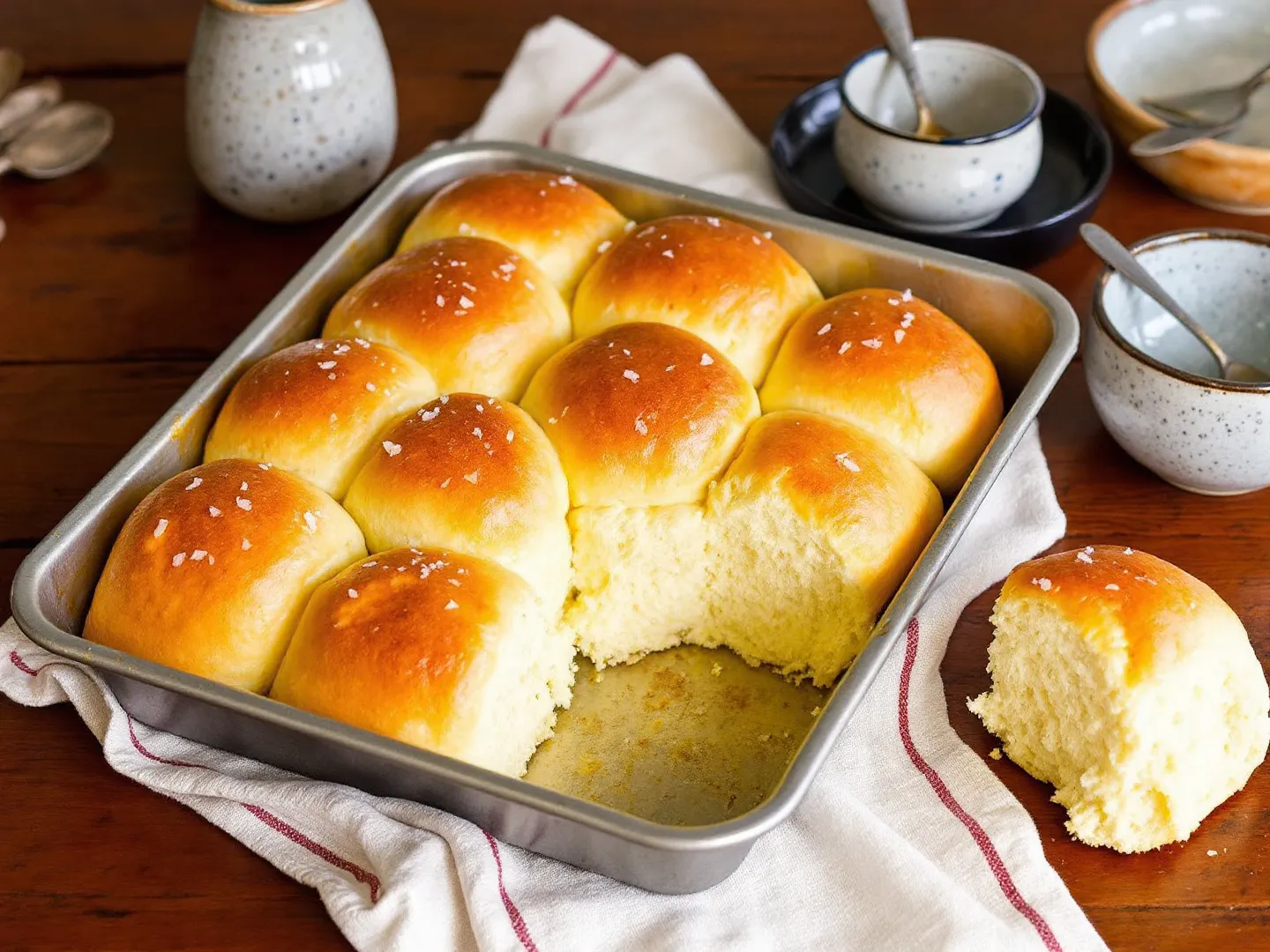
Yeast is a living thing that wants exactly three things from you, which is warmth, food and to be left alone for an hour. Most of us have had relatives with the same list. Give it those, and it does the heavy lifting.
The short version
Use liquid around 110°F (warm, not hot), knead until the dough is smooth and a small piece stretches thin enough to see light through, and let it rise until about doubled, usually 1 to 2 hours. Shape, let it rise again until puffy and a floured fingertip dent springs back slowly, then bake.
Instant vs. active dry yeast
Instant yeast (also sold as rapid-rise or bread machine yeast) has fine granules that dissolve on contact, so you can stir it straight into the flour. It's the easiest to use and the most forgiving.
Active dry yeast has bigger granules with a layer of dormant cells on the outside. It works best dissolved first in warm liquid with a pinch of sugar for 5 to 10 minutes, until it foams. That foam also proves it's alive, which is useful if the jar has been around a while.
You can swap them one for one in most home recipes. Instant rises a little faster, so start checking the dough 10 to 15 minutes sooner. One standard packet holds 2¼ teaspoons, about 7 grams. Keep opened yeast in a sealed jar in the fridge or freezer; it lasts months that way instead of weeks.
Getting the liquid temperature right
| Liquid temperature | What happens | Use it for |
|---|---|---|
| Below 70°F | Yeast is slow but fine | Long, slow rises and overnight doughs |
| 95°F to 115°F | Warm to the touch like a baby's bath | Dissolving active dry yeast, most doughs |
| 120°F to 130°F | Hot but not painful | Instant yeast mixed with the flour first, where the flour cools it fast |
| 140°F and up | Yeast starts dying | Nothing. Let it cool. |
Kneading and the windowpane test
Kneading lines up the proteins in flour into gluten, the stretchy web that traps the gas yeast makes. Without enough of it, bread is dense and crumbly. With it, dough holds its shape and rises tall.
By hand, push the dough away from you with the heel of your hand, fold it back over itself, give it a quarter turn and repeat. Plan on 8 to 12 minutes. In a stand mixer with the dough hook on medium-low, 6 to 10 minutes. The dough starts shaggy and sticky and turns smooth, springy and slightly tacky, like the back of your hand after lotion.
To check, pinch off a piece the size of a walnut and gently stretch it between your fingers, turning it as you go. If it thins into a membrane you can see light through before it tears, it's done. If it rips right away, knead 2 more minutes and test again. Rich doughs with lots of butter, like buttery brioche loaf, take longer to get there.
Resist adding flour to stop the stickiness. A soft, tacky dough makes soft, tender bread. Use a bench scraper and lightly oiled hands instead, and add flour only a tablespoon at a time if the dough is truly wet and shapeless.
The first rise
Rub a bowl with a little oil, add the dough and turn it to coat, cover and leave it somewhere comfortably warm, about 75°F to 80°F. A turned-off oven with just the light on works well, as does the top of the fridge.
Most doughs about double in 1 to 2 hours. Time is only a guide; the dough is the clock. A warm kitchen speeds it up and a cold one slows it down, and a slower rise gives better flavor. To make it easy to judge, rise the dough in a straight-sided container and mark the starting height with tape.
When it's ready, press it down gently to release the large bubbles, then turn it out to divide and shape. No need to punch it.
The poke test
- Springs back right away: it's underproofed. Give it 15 more minutes and test again.
- Springs back slowly and leaves a slight dent: it's ready. Shape it or bake it.
- Doesn't spring back at all, or the dough sighs and sinks: it's overproofed. For a first rise, just press it down, reshape and let it rise again, which takes less time. For a shaped loaf, bake it right away and expect it to be a little flat.
Shaping, second rise and baking
- Divide the dough with a bench scraper, weighing the pieces if you want them even. For rolls, about 2 ounces (55 to 60 grams) each.
- For a roll, flatten a piece, fold the edges into the middle, flip it seam side down and cup your hand over it. Roll it in small circles on an unfloured counter until the top is tight and smooth. The tension helps it rise up instead of out.
- Set the shaped dough in the pan, cover loosely and let it rise again until puffy and about one and a half times bigger, usually 30 to 60 minutes. Start heating the oven partway through. Use the poke test here too.
- Bake until golden. An instant-read thermometer is the surest check. Soft rolls and enriched breads are done at 190°F, and lean, crusty loaves at 200°F to 210°F.
- Let bread cool at least 20 minutes before cutting, a full hour for a loaf. It's still cooking inside, and cutting early makes the crumb gummy.
The overnight fridge rise
Cold slows yeast without stopping it, which is handy and makes better bread. Two ways to use it: after kneading, cover the bowl and refrigerate the dough for 8 to 18 hours for the first rise, then shape it cold (cold dough is easier to shape). Or shape the rolls, cover the pan tightly and refrigerate up to 16 hours, then set them out for 45 minutes to 1 hour until puffy before baking. That's how soft pull-apart dinner rolls and cinnamon rolls with overnight option and cream cheese icing come out of the oven warm without anyone getting up at five.
Common mistakes
- Liquid too hot. Over 130°F it starts killing yeast. If it feels hot on your wrist, wait.
- Salt dumped on the yeast. Salt pulls water from yeast cells. Mix it into the flour instead.
- Old yeast. If the dough hasn't moved in 2 hours somewhere warm, the yeast is likely dead. Test a spoonful in warm water with sugar.
- Too much flour while kneading. It makes dry, tight bread. Keep the dough tacky.
- Going by the clock. Rise times in recipes assume an average kitchen. Watch the size and use the poke test.
Questions, answered
Can I use instant yeast instead of active dry?
Yes, in the same amount. Mix it straight into the flour and expect the dough to rise 10 to 15 minutes faster.
What temperature water kills yeast?
Yeast starts to die around 130°F to 140°F. Aim for about 110°F, which feels warm but not hot on your wrist.
How do I know when dough has doubled?
Rise it in a straight-sided container marked at the start, or use the poke test. A floured fingertip dent that springs back slowly means it's ready.
Can I let dough rise overnight in the fridge?
Yes, for 8 to 18 hours. It rises slowly and tastes better. Let shaped dough warm up until puffy, about an hour, before baking.
Why didn't my dough rise?
Usually dead yeast, liquid that was too hot, or a cold kitchen. Check the yeast date and find a warmer spot before giving up.
Published November 9, 2026.