How to Blind Bake a Pie Crust (Partial or Full)
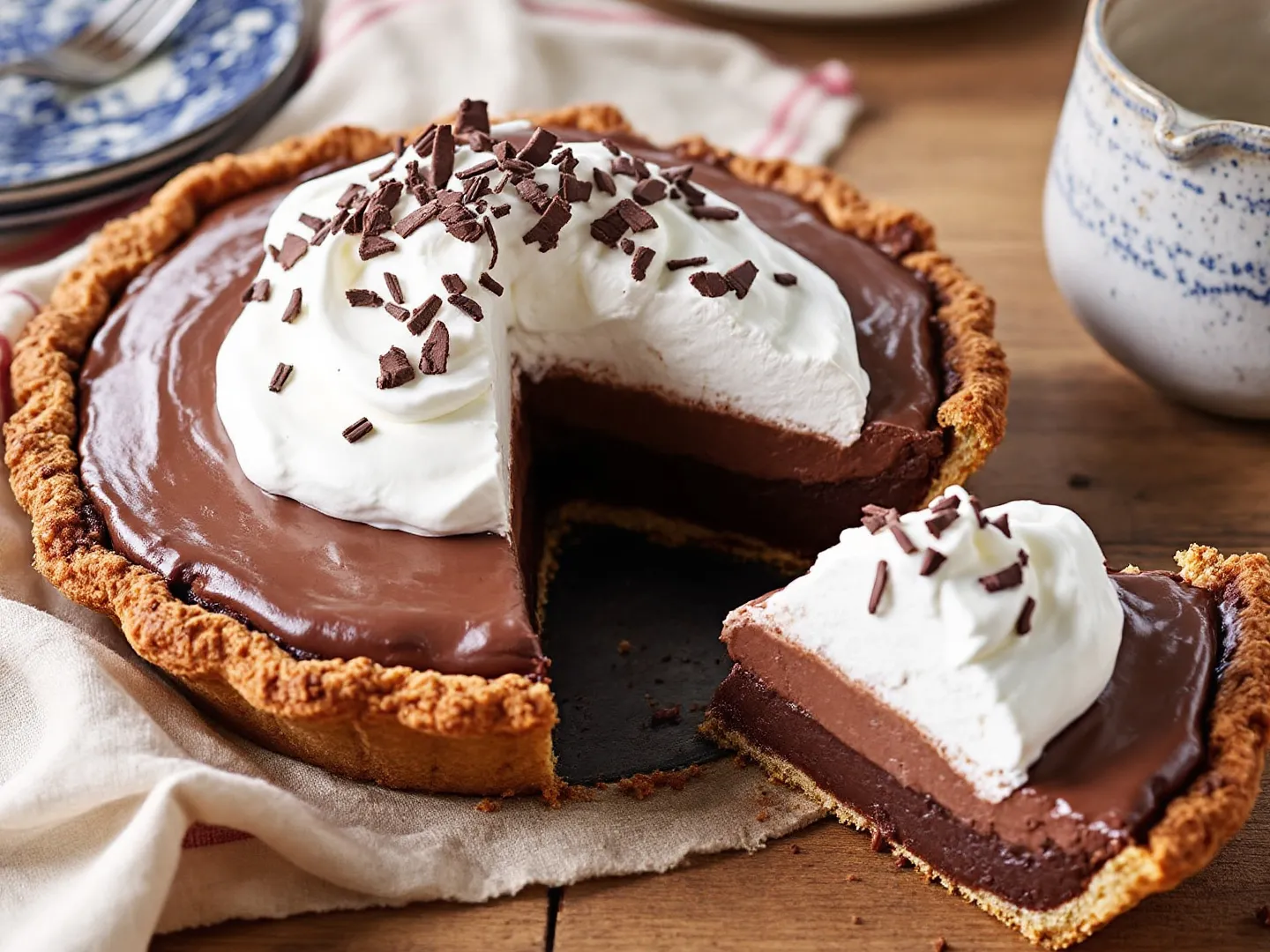
Blind baking means baking a crust with nothing in it, which sounds like a trick question and is really just good planning. The crust gets a head start, and the filling stops being blamed for things it didn't do.
The short version
Chill the lined pie plate, prick the bottom, line it with parchment and fill it to the rim with pie weights, dried beans or sugar. Bake at 375°F until the edges are dry and light gold, about 25 minutes, then lift out the weights and bake 5 to 8 minutes more for a partly baked shell or 15 to 20 for a fully baked one.
Partial or full, and when you need each
Fully bake the shell when the filling won't go back in the oven at all: cream pies, pudding pies and fresh fruit tarts. Our chocolate cream pie with a silky two-chocolate filling and coconut cream pie with toasted coconut both start this way, and so does lemon meringue pie with a tall, glossy meringue, which only returns to the oven long enough to brown the meringue.
Partly bake it when the filling is wet and bakes for a shorter time than the crust needs, like custards and quiches. A partly baked shell is dry and set but still pale, so it can finish browning with the filling. quiche lorraine with bacon and gruyère, silky pumpkin pie and roasted sweet potato pie all come out with crisper bottoms this way.
Fruit pies with a top crust don't need it. They bake long enough for the bottom to cook through.
What you need
- A pie crust fitted into a 9-inch plate, edge crimped, and chilled at least 30 minutes, or frozen 15. Cold dough holds its shape.
- A sheet of parchment (or foil) big enough to hang over the edges.
- Weights: ceramic or steel pie weights, 2 to 3 cups of dried beans or rice, or about 3 cups of granulated sugar. Fill to the rim, not just the bottom.
- A sheet pan to set the plate on, which makes it easy to move and helps the bottom brown.
- Glass or metal pie plates brown best. Glass lets you check the bottom.
How to blind bake, step by step
- Heat the oven to 375°F with a rack in the lower third. Put a sheet pan on the rack to heat if you have one to spare; a hot pan under the plate browns the bottom faster.
- Prick the bottom and sides of the chilled crust all over with a fork, about every inch. This lets steam escape so the bottom doesn't puff.
- Crumple the parchment, smooth it back out (it fits the curves better) and press it into the crust. Fill it all the way to the top edge with weights, pushing them into the corners. Weights that only cover the bottom let the sides slump.
- Bake until the edge looks dry and is just turning light gold, 20 to 25 minutes.
- Lift out the parchment and weights together. If the bottom looks wet or sticks to the paper, give it 2 more minutes with the weights in.
- For a partly baked shell, bake 5 to 8 minutes more, until the bottom looks dry and matte. For a fully baked shell, bake 15 to 20 minutes more, until the whole crust is a deep golden brown, bottom included.
- Cool on a rack. Fill a fully baked shell only once it's completely cool. A partly baked shell can be filled warm and baked right away.
Times and temperatures at a glance
| Shell | With weights | Without weights | Done when |
|---|---|---|---|
| Partly baked | 20 to 25 minutes at 375°F | 5 to 8 minutes | Bottom dry and matte, edges light gold |
| Fully baked | 20 to 25 minutes at 375°F | 15 to 20 minutes | Deep golden brown all over |
| Hot start (faster browning) | 15 minutes at 425°F | 8 to 15 minutes at 350°F | Same cues as above |
| Graham or cookie crumb crust | None needed | 8 to 10 minutes at 350°F | Fragrant and slightly darker |
Stopping shrinking and soggy bottoms
Shrinking happens when gluten that was stretched springs back in the heat, and when butter melts before the crust sets. Rest the dough after mixing, never pull it to fit the plate (lift and let it drop into the corners), leave a thick, crimped rim that rests on the lip of the plate, and chill the lined plate before baking. Weights filled to the top hold the sides up while they set.
Soggy bottoms come from a crust that never fully dried before the filling went in. Bake on the lower rack, give the bottom the extra minutes without weights, and look for a dry, matte surface rather than a shiny one. For custards and quiches, brush the hot partly baked shell with a beaten egg white and return it to the oven for 2 minutes. The thin cooked layer seals the crust so the filling doesn't soak in. For cream pies, a thin layer of melted chocolate brushed on the cooled shell does the same job.
Common mistakes
- Baking warm dough. It slumps down the sides before it sets. Chill or freeze the lined plate first.
- Too few weights. Fill to the rim. A thin layer on the bottom does nothing for the sides.
- Pulling the weights too early. If the dough is still raw under the paper, it puffs and slides. Wait until the edge looks dry.
- Stopping at pale. A fully baked shell should be golden brown, bottom too. Pale crusts go soft under cream fillings.
- Filling a fully baked shell while it's warm. Cool it completely, or the steam softens it.
Making it ahead
A fully baked shell keeps at room temperature, loosely covered, for up to 2 days. You can also line the plate, wrap it well and freeze it unbaked for up to a month, then blind bake straight from the freezer, adding 5 minutes with the weights. Cool the beans or rice and keep them in a jar marked for pie only. They can't be cooked after baking, but they work as weights for years.
Questions, answered
Can I blind bake without pie weights?
Yes. Dried beans, rice or granulated sugar all work. Fill the parchment to the rim. Sugar conducts heat well and gives the most even shape.
Do I need to blind bake for pumpkin pie?
It's optional but helps. A partly baked shell gives a crisper bottom under the wet custard. Bake it 5 to 8 minutes past removing the weights.
What temperature do you blind bake a pie crust?
375°F is steady and forgiving. Some bakers start at 425°F for 15 minutes, then finish at 350°F. Both work; watch the color, not just the clock.
Should I prick the crust with a fork?
Yes, all over the bottom and sides. It lets steam escape so the crust doesn't bubble up.
Why did my crust slide down the sides?
Warm dough, too few weights, or stretched dough. Chill the lined plate, fill the weights to the rim and let the dough settle into the plate without pulling.
Published November 9, 2026.