No-Yeast Dinner Rolls
Not rated yet. Be the first.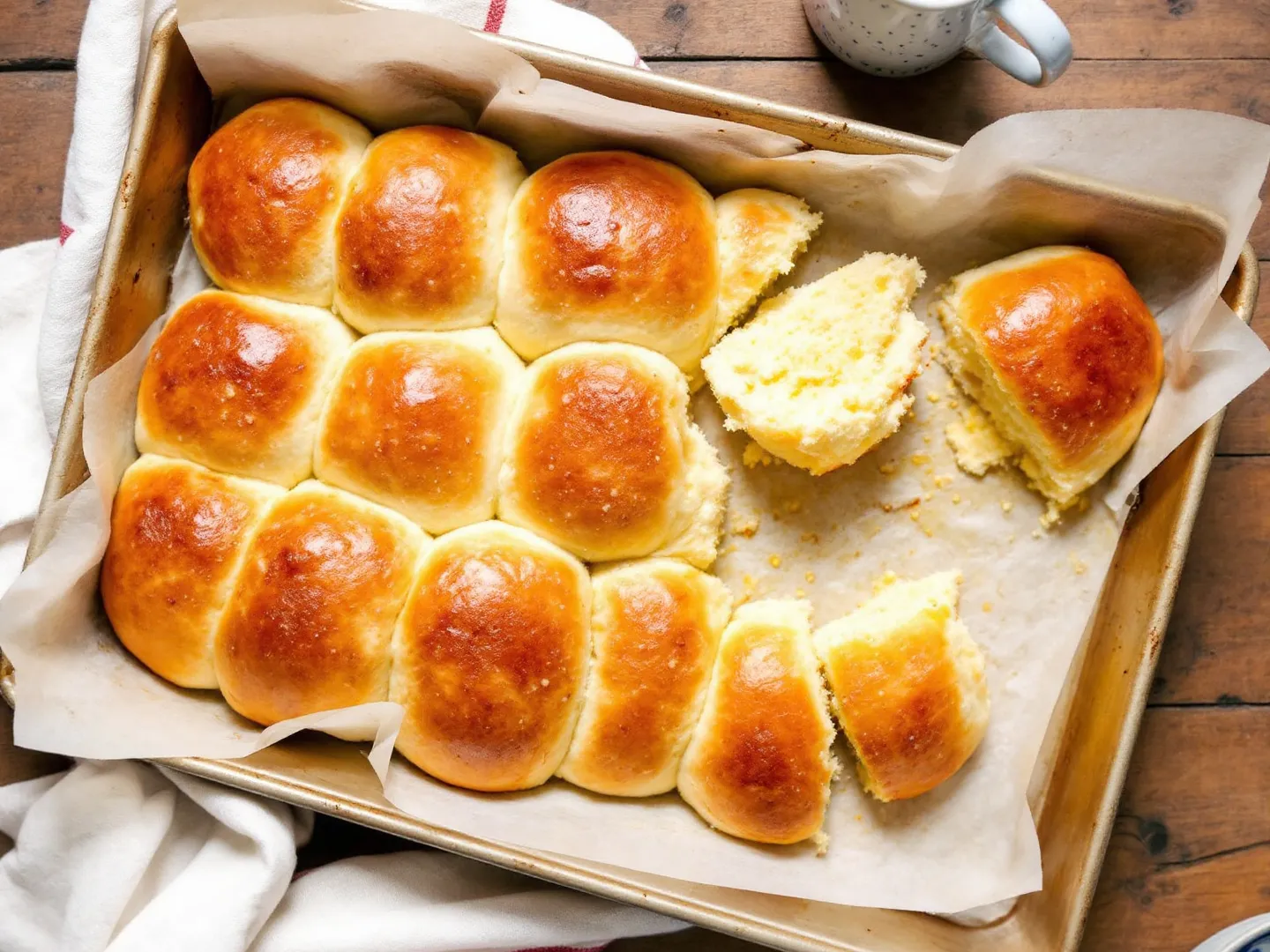
Somebody always remembers the rolls with the roast already resting, and some years that somebody is us. No yeast, no rising, one bowl, and twelve rolls come out golden in about forty minutes.
The short version
Stir melted butter, milk, sugar, baking powder and salt together, mix in flour until the dough is soft and just barely tacky, cut into 12 pieces, brush with egg. Bake at 375°F for 20 to 25 minutes. Weigh the flour.
What makes ours better
why ours wins the argument at dinner
-
Weigh the flour. A cup of scooped flour can weigh 20 percent more than a spooned one, and extra flour is the main reason quick rolls turn out dense. 330 grams is exact every time.
-
Use melted butter in the dough. Melted butter means no cutting in and no rolling. It stirs in right away and the rolls come out tender.
-
Brush with egg before baking. The egg wash gives a shiny, deep golden top that makes plain dough look like it came from a bakery.
-
Brush with butter when they come out. A swipe of melted butter and a pinch of flaky salt on the hot rolls softens the crust and adds flavor.
What you need
the stars of the show
- Unsalted butter¼ cup
- Whole milk1 cup
- Granulated sugar1 tablespoon
- All-purpose flour2¾ cups
- Egg1 large
yes, all of the butter
Steps
apron on. phone down. mostly.
-
Heat the oven, line the pan
Heat the oven to 375°F with a rack in the middle. Line a large baking sheet with parchment paper.
-
Whisk the wet ingredients
In a large bowl, whisk the melted butter, milk, sugar, baking powder and salt until combined. The butter may clump a bit in the cold milk; that's fine.
-
Add the flour
Add the flour and stir with a spatula until a shaggy dough forms. Then mix with your hands for about 30 seconds until it comes together in a soft ball that is only slightly tacky. If it sticks to your hands, add flour a tablespoon at a time.
Stop as soon as it comes together. Overworking makes tough rolls.
-
Shape the rolls
Pat the dough into a log on the counter and cut into 12 even pieces, about 55 grams each. Roll each piece into a smooth ball and set on the baking sheet about 1½ inches apart.
-
Brush with egg
Brush the tops and sides of the rolls with the beaten egg.
-
Bake
Bake until puffed, deep golden and the bottoms sound hollow when tapped, 20 to 25 minutes.
Rolls that touch will bake softer and taller. Rolls with space around them get crustier sides.
About 22 min. Cook mode has a timer for this step.
-
Butter and serve
Brush the hot rolls with melted butter and sprinkle with flaky salt if you like. Let them cool for 5 minutes, then serve warm.
About 5 min. Cook mode has a timer for this step.
Good to know
the stuff I’d tell you over the phone
- Old baking powder is the usual cause of flat rolls. Stir a teaspoon into hot water; if it fizzes strongly, it's good.
- For garlic butter rolls, stir 1 minced garlic clove and a spoonful of chopped parsley into the melted butter for brushing.
- Make ahead by shaping the rolls, covering and refrigerating for up to 24 hours, then bake straight from the fridge, adding 2 to 3 minutes.
- Storage. Airtight at room temperature, 3 days. Freezer in a zip-top bag, 3 months; reheat wrapped in foil at 350°F for 10 to 15 minutes.
Questions, answered
asked and answered at the kitchen counter
Why are my no-yeast rolls dense or hard?
Too much flour is the most common cause, from scooping the cup straight from the bag. Weigh the flour. The second cause is old baking powder, and the third is overmixing.
Can I use self-rising flour?
Yes. Use the same weight of self-rising flour, leave out the salt, and cut the baking powder to 1 teaspoon. Self-rising flour already contains some of both.
Can I use buttermilk instead of milk?
Yes, and the rolls will be a little more tender and tangy. Swap it cup for cup and add ½ teaspoon of baking soda to the dry ingredients with the same amount of baking powder.
Can I use olive oil instead of butter?
Yes, use ¼ cup of olive oil, but start with 2½ cups of flour since oil makes a wetter dough, and add more as needed. The flavor is less rich.
Can I make the dough ahead?
Yes. Shape the rolls, cover well and refrigerate up to 24 hours, then bake straight from the fridge. Baking powder starts working on contact with milk, so don't hold it longer.
From the table
Made it? Tell me how it went, and who went back for seconds when they thought nobody was looking.
Made it?
stars first, story second. I read every one.
Tap a star
- No reviews yet. Yours would be the first, and I’d read it twice.
Find it in
Published October 29, 2026.