Cooking guides / Meat & holidays
How to Tell When Steak Is Done (Temps and Touch Test)
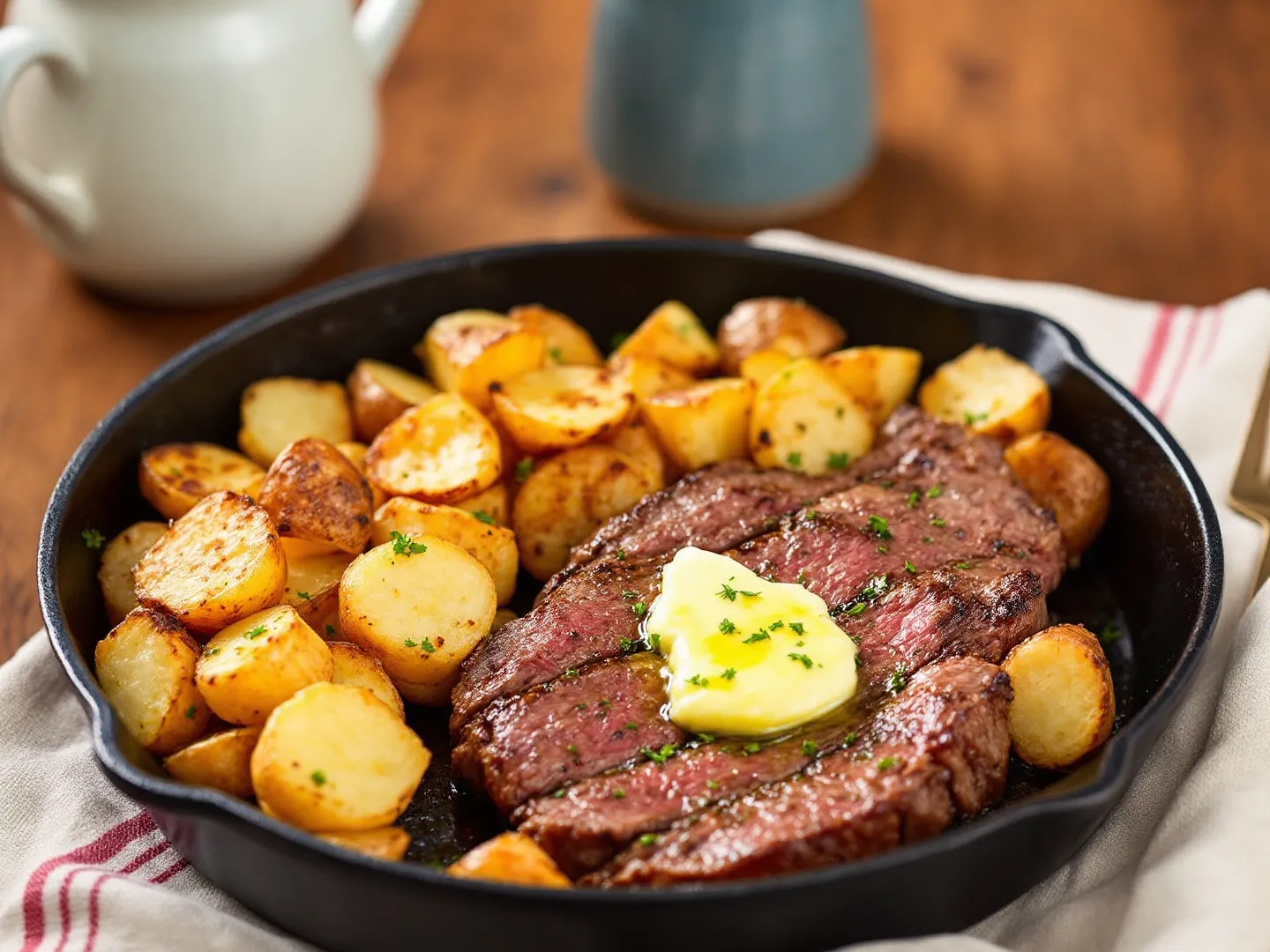
A good steak costs real money, and the difference between medium-rare and gray is about ninety seconds. Dad says he can tell by poking it. Dad also owns a thermometer, and lately he's been using it when he thinks nobody's watching.
The short version
Slide an instant-read thermometer into the center from the side and pull the steak 5 degrees before your target: 125°F for medium-rare, 135°F for medium. Rest it 5 minutes and it will finish on its own.
Steak doneness chart
| Doneness | Pull at | After resting | Inside | Feels like |
|---|---|---|---|---|
| Rare | 120°F | 125°F | Deep red, barely warm | Soft and squishy |
| Medium-rare | 125°F | 130°F to 135°F | Red-pink edge to edge, warm | Gives easily, springs back slowly |
| Medium | 135°F | 140°F to 145°F | Pink center, browner edges | Gives a little, springs back |
| Medium-well | 145°F | 150°F to 155°F | A trace of pink | Firm with a little give |
| Well-done | 155°F | 160°F | Brown throughout | Firm all the way |
Reading the chart
The USDA's safe minimum for steak is 145°F with a 3-minute rest, which is medium. Rare and medium-rare are a choice a lot of cooks make with whole steaks, since bacteria sit on the surface and a hot sear kills them. That doesn't apply to burgers, cube steak or anything mechanically tenderized (the label will say so), where the outside has been pushed inside. Cook those to 160°F.
Fattier cuts like rib-eye and strip are at their best around medium-rare to medium, when the fat has softened enough to taste rich. Lean tenderloin is best on the rare side, and skirt and flank go chewy past medium.
How to take a steak's temperature
- Use an instant-read digital thermometer. A dial thermometer is too slow and too wide for a steak.
- Lift the steak with tongs and slide the probe in from the side, so the tip sits in the very center of the thickest part. Going in from the top on a 1-inch steak puts the tip too close to the pan.
- Keep it off bone and big pockets of fat, which read high and low.
- Start checking a couple of minutes before you think it's ready. Steak climbs fast at the end, often a degree every 10 to 15 seconds.
- Check each steak. Two steaks from the same package can be a few minutes apart.
Thickness changes everything
The thicker the steak, the more heat is stored in the outer layer when it comes off, and the more it climbs while it rests. A thin steak barely moves; a thick one seared over high heat can go up 7 degrees. A low-oven start, like a reverse sear, leaves less heat stored in the outside, so the climb is smaller.
| Thickness | Pull this far below target | Best way to cook it |
|---|---|---|
| ¾ inch or less | 2 to 3 degrees | Hot pan or grill, a couple of minutes a side |
| 1 inch | 3 to 5 degrees | Hot pan, flipping every minute or so |
| 1½ inches | 5 degrees | Sear, then butter-baste over lower heat or finish in a 400°F oven |
| 2 inches or more | 5 to 7 degrees if seared first, 2 to 3 if reverse-seared | Reverse sear: a 250°F oven until 10 to 15 degrees below target, then a very hot pan |
The touch test, as a backup
Raw steak is soft. As it cooks, the proteins tighten and it gets firmer, so you can press the center with a fingertip and feel roughly where you are. One rough guide is your own hand: relax it and press the fleshy pad below your thumb, and that's about rare. Touch your thumb to your index finger and the pad firms up to about medium-rare; to your middle finger, medium; to your ring finger, medium-well.
It's not precise. Hands differ, cuts differ (a rib-eye feels softer than a sirloin at the same temperature), and it takes a lot of steaks to learn. Use it to know when to reach for the thermometer, or when there isn't one. In a pinch, a small nick in the thickest part, on the side you'll serve facing down, shows you the color; just remember it will cook a step further as it rests.
Resting
Rest a 1-inch steak 5 minutes and a thick one 8 to 10, on a rack or a warm plate rather than a flat board, so the bottom crust doesn't steam. Don't wrap it in foil; that softens the crust. Resting lets it finish cooking and gives the juices time to settle, so they stay in the meat when you cut it.
Then slice it across the grain. Look for the lines of muscle running through the meat and cut crosswise to them, which matters most with skirt, flank and hanger. A pat of butter on top while it rests never hurt anyone, as skillet steak and potatoes with garlic herb butter and cast iron pan-seared steak with garlic butter will tell you.
Common mistakes
- Pulling it at the number you want to eat. Carryover takes it one stage further. Pull 5 degrees early.
- Cooking it straight from the fridge with no salt. Salt it at least 40 minutes ahead, or overnight uncovered in the fridge, and pat it very dry. A dry surface browns fast, so the inside doesn't overcook waiting for the crust.
- Cutting into it to check, again and again. Every cut lets juice out. One thermometer reading does the job.
- A pan that isn't hot enough. The steak should sizzle loudly the second it lands. If it doesn't, the inside cooks while the outside goes gray.
- Skipping the rest. Cut right away and the juice ends up on the plate.
Questions, answered
What temperature is medium-rare steak?
Pull it at 125°F. It rests up to 130°F to 135°F, warm and red-pink all the way across.
Is medium-rare steak safe?
The USDA minimum is 145°F with a rest, but whole steaks seared on the outside are widely eaten rarer. Burgers and mechanically tenderized steaks should reach 160°F.
How long should a steak rest?
About 5 minutes for a 1-inch steak and 8 to 10 for one 1½ inches or thicker.
How can I tell when steak is done without a thermometer?
Press the center. Medium-rare gives easily and springs back slowly; medium springs back faster; well-done feels firm. If in doubt, nick it where nobody will see.
Published November 9, 2026.