Cooking guides / Meat & holidays
Meat Temperature Chart: When to Pull It and When It's Done
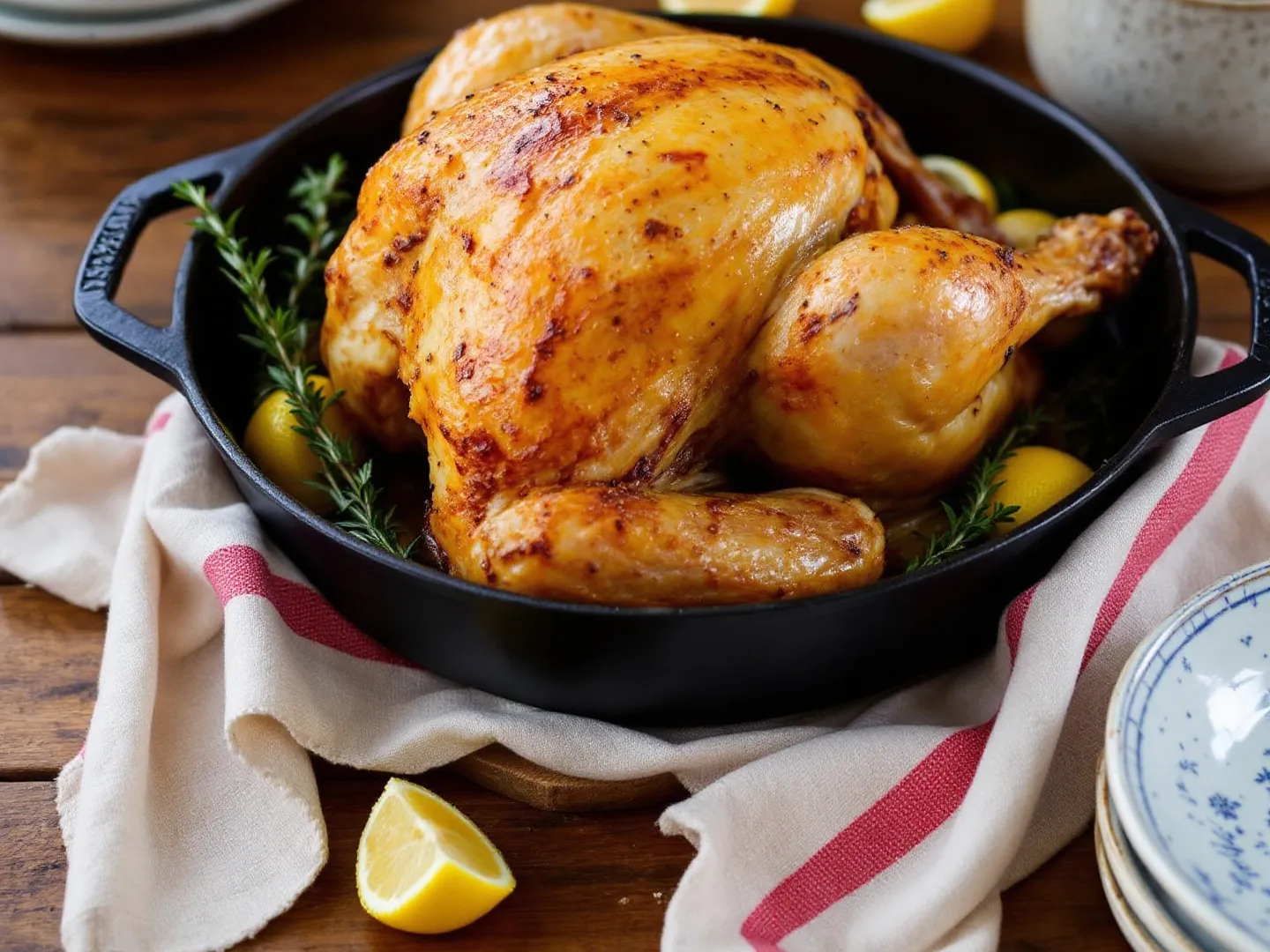
Every family has someone who can tell a roast is done by looking at it, and every family has eaten that roast. A thermometer costs less than one ruined prime rib and settles the argument before it starts.
The short version
Take meat off the heat a few degrees before your target, because it keeps cooking while it rests. Whole cuts of beef, lamb and pork are safe at 145°F after a 3-minute rest, ground meat at 160°F, all poultry and leftovers at 165°F, and fish at 145°F.
How to read this chart
Every number below comes in two parts. The pull temperature is when the meat comes off the heat. The final temperature is where it lands after resting, because the hot outside keeps pushing heat into the cooler middle for several minutes after you stop cooking. A steak climbs 3 to 5 degrees, a big roast or a turkey 5 to 10.
The USDA safe minimum is the final temperature the government says kills the bacteria that matter, measured in the thickest part. Where we suggest pulling below it, the rest is what carries the meat over the line, so let it rest the full time and check again if you want to be sure. Ground meat and anything reheated never gets that shortcut: it has to read the safe number on the thermometer.
Beef and lamb steaks, chops and roasts
| Doneness | Pull at | After resting | What the center looks like |
|---|---|---|---|
| Rare | 120°F | 125°F | Deep red, cool to warm |
| Medium-rare | 125°F | 130°F to 135°F | Rosy red all the way across, warm |
| Medium | 135°F | 140°F to 145°F | Pink center, tan edges |
| Medium-well | 145°F | 150°F to 155°F | A faint blush in the middle |
| Well-done | 155°F | 160°F | Gray-brown throughout |
Beef and lamb, the fine print
The USDA minimum for whole cuts of beef, lamb and veal is 145°F with a 3-minute rest, which lands at medium. Rare and medium-rare are a choice plenty of cooks make with whole steaks and roasts, because the bacteria live on the surface and a hard sear takes care of them. That logic stops at ground beef, where the surface gets mixed into the middle.
For big roasts like reverse-sear prime rib or a garlic rosemary roast leg of lamb, pull 5 to 10 degrees early instead of 5, since a heavy roast holds a lot more heat. Tough cuts that braise, like chuck, short ribs and brisket, are a different story. They're safe early but aren't tender until somewhere around 195°F to 205°F, when the connective tissue has melted. For those, use a fork, not a thermometer: it should slide in with no push back.
Pork, poultry, ground meat, fish and more
| Food | Pull at | Final (USDA minimum) | Notes |
|---|---|---|---|
| Pork chops, tenderloin, loin roast | 140°F | 145°F plus a 3-minute rest | A blush of pink is fine and much juicier |
| Pork shoulder, ribs (for pulling) | 195°F to 205°F | 145°F | Safe early, tender only when it hits the high number |
| Fresh (raw) ham | 140°F | 145°F plus a 3-minute rest | Check the label; most hams are already cooked |
| Fully cooked ham, reheated | 140°F | 140°F | 165°F if it was repackaged or is leftover |
| Chicken or turkey breast | 155°F to 160°F | 165°F | Rest it 10 to 30 minutes so it climbs |
| Chicken or turkey thighs and legs | 170°F to 175°F | 165°F | Safe at 165 but still chewy; dark meat wants more |
| Whole chicken or turkey | Thigh 170°F, breast 155°F | 165°F in breast and thigh | Check both; the breast always gets there first |
| Ground beef, pork, lamb (burgers, meatloaf) | 160°F | 160°F | Don't pull early |
| Ground chicken or turkey | 165°F | 165°F | Don't pull early |
| Fish fillets and steaks | 140°F | 145°F | Opaque and just flaking at the thickest part |
| Shrimp, scallops, lobster | Opaque and firm | 145°F | Shrimp curl into a loose C; a tight O is overdone |
| Egg dishes, quiche, strata | 160°F | 160°F | Center set, a knife comes out clean |
| Casseroles, stuffing, leftovers | 165°F | 165°F | Check the very center, not the bubbling edge |
Where to put the thermometer
- Steaks and chops: slide it in from the side so the tip sits in the very center. Going in from the top on a thin steak puts the tip near the pan.
- Roasts: the thickest part, halfway through, away from bone and big seams of fat. Bone reads hot and fat reads strange.
- Whole birds: the thickest part of the thigh, angled toward the body but not touching the bone, then the deepest part of the breast near the neck end. Both have to be done.
- Burgers and meatballs: in from the side to the middle of the thickest one.
- Fish: the thickest part of the fillet, usually near the head end.
- Casseroles and stuffing: dead center. The edges will be done long before.
- Check two or three spots and trust the lowest number.
Resting and carryover
Resting isn't fussiness. Muscle fibers squeeze tight as they cook, and right off the heat the juices are pushed toward the center. Give it a few minutes and they settle back through the meat, so they end up in your mouth instead of on the cutting board.
Rest steaks and chops 5 minutes, chicken parts and tenderloins 5 to 10, whole chickens and roasts 15 to 20, and a turkey 30 to 45. Tent big roasts loosely with foil if the kitchen is cold, but leave steaks and poultry with crisp skin uncovered; trapped steam softens the crust you worked for. Cuts cooked low and slow, like a reverse-seared steak or a herb and garlic pork shoulder roast at 275°F, carry over less than ones blasted with high heat, so pull those just a couple of degrees early.
Getting a good reading
An instant-read digital thermometer is the tool, and it should give you a number in 2 to 3 seconds. The old dial kind is slow and needs to be pushed deep to read right, which is no help in a thin chop. For roasts and turkeys, a leave-in probe with a cord out the oven door saves you from opening it every ten minutes.
Test yours once in a while: stir a glass of ice and water for a minute and dip the probe in. It should read 32°F. If it's off, recalibrate it if it allows that, or just remember the difference.
Common mistakes
- Pulling at the final number. Take meat off at the final temperature and it will rest its way past it. Pull early, then rest.
- Trusting color or clear juices. Burgers can brown before they're safe, and smoked or brined chicken can stay pink after it's done. The thermometer is the only test that tells you.
- Touching bone. Bone conducts heat and gives a high reading, so the meat next to it can be underdone.
- Checking only one spot. Roasts and birds cook unevenly. Read the thickest part and one or two more.
- Skipping the rest. Cut a roast right away and the board gets the juice, not your plate.
Questions, answered
Is pink pork safe to eat?
Yes. Whole cuts of pork are safe at 145°F after a 3-minute rest, which leaves a pale pink center. Ground pork needs 160°F.
Why can steak be rare but burgers need to be {{160F}}?
Bacteria sit on the outside of whole cuts, and searing kills them. Grinding mixes the outside into the middle, so the whole burger has to get hot.
What temperature is chicken done?
The USDA minimum is 165°F. Pull breasts at 155°F to 160°F and let them rest up to 165°F; cook thighs to 170°F to 175°F for the best texture.
What temperature is medium-rare?
Pull beef or lamb at 125°F. It rests up to 130°F to 135°F.
How long should meat rest?
About 5 minutes for steaks and chops, 15 to 20 for roasts and whole chickens, and 30 to 45 for a turkey.
Published November 9, 2026.