Cooking guides / Meat & holidays
How to Brine a Turkey (Wet or Dry)
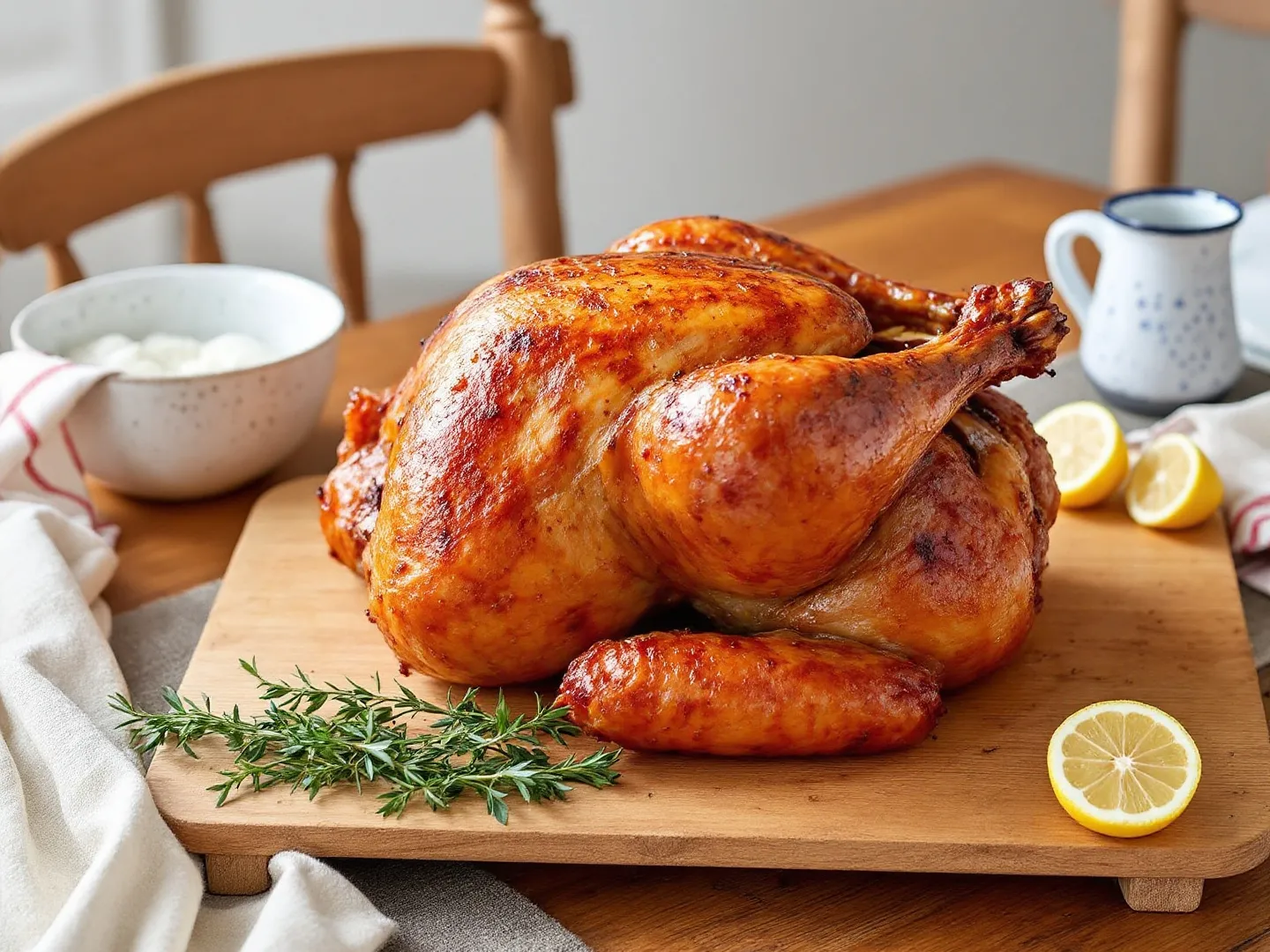
Brining is how a bird that's mostly breast meat, roasted for hours in front of an audience, comes out juicy anyway. All it asks for is salt, time and a spot in the fridge, which in November is the hardest of the three.
The short version
For most cooks, dry brining is easier and better: rub about 1 teaspoon of flaky kosher salt per pound over the turkey and refrigerate it uncovered for 1 to 3 days. A wet brine of about 5 percent salt for 12 to 24 hours works too, but it takes a bucket, a lot of cold space and a careful eye on the temperature.
What brining does
Salt loosens the tightly wound proteins in muscle, and loosened proteins hold on to more of their own juice when they heat up. That's the whole trick. Given enough time, the salt also travels deep into the meat, so the middle of the breast is seasoned, not just the skin.
A wet brine soaks the bird in salty water. The meat takes on some of that water, which makes it plump and very forgiving, but it can taste a little watery and the skin comes out soft unless you dry it well. A dry brine is just salt rubbed on the outside. The salt draws out a little moisture, dissolves in it, and the meat pulls that seasoned liquid back in. Nothing is added but salt, so the turkey tastes more like turkey, and the skin dries in the fridge and roasts up crisp.
Wet brine or dry brine
| Wet brine | Dry brine | |
|---|---|---|
| What it is | Bird submerged in salt water | Salt rubbed on the outside |
| Time for a 12- to 16-pound turkey | 12 to 18 hours, never more than 24 | 1 to 3 days |
| Space | A cooler or bucket plus 2 gallons of liquid | A sheet pan on one fridge shelf |
| Texture | Very juicy, slightly spongy | Juicy and dense, more turkey flavor |
| Skin | Soft unless dried overnight | Dry, browns deep and crackles |
| Mess | Gallons of raw-turkey water to deal with | Almost none |
| Best for | Smoking or frying, extra insurance | Roasting, which is most of us |
How much salt
Kosher salt isn't one thing. The light, flaky kind weighs about 8 grams per tablespoon, the dense, coarse kind about 15, and table salt about 18. Swap one for another by the spoon and you can double the salt by accident. If your box doesn't say, weigh a level tablespoon. Better yet, weigh the salt itself: about 3 grams per pound of bird for a dry brine and about 210 grams per gallon of water for a wet one.
Table salt works if it's all you have. Use less, as below, and know that the iodine in some brands can leave a faint metallic taste after a long soak.
Salt amounts by type
| Salt | Dry brine per pound of bird | Wet brine per gallon of water |
|---|---|---|
| Light, flaky kosher (about 8 g per tablespoon) | 1 teaspoon | 1½ cups |
| Dense, coarse kosher (about 15 g per tablespoon) | A heaping ½ teaspoon | A scant 1 cup |
| Table salt (about 18 g per tablespoon) | A scant ½ teaspoon | ¾ cup |
How long, by bird
| Bird | Wet brine | Dry brine | Brine needed (wet) |
|---|---|---|---|
| Turkey, 10 to 14 pounds | 12 to 18 hours | 1 to 2 days | About 2 gallons in a bag |
| Turkey, 14 to 20 pounds | 16 to 24 hours | 2 to 3 days | 2 to 3 gallons in a bag |
| Bone-in turkey breast | 6 to 10 hours | 12 to 24 hours | About 1 gallon |
| Whole chicken | 4 to 6 hours | 12 to 24 hours | About 1 gallon |
| Chicken parts | 1 to 2 hours | 4 to 24 hours | 2 to 3 quarts |
How to dry brine
- Make sure the turkey is fully thawed, pull out the neck and giblets, and pat it dry with paper towels, inside and out.
- Measure the salt for the bird's weight. Add black pepper, dried herbs or grated citrus zest if you like, and a teaspoon of baking powder for even crisper skin.
- Sprinkle it from about a foot above the bird so it lands evenly. Put the most on the breast and thighs, a little on the back and wings, and a pinch in the cavity. Loosen the breast skin with your fingers and rub some right on the meat.
- Set the turkey breast up on a rack over a rimmed sheet pan and refrigerate it uncovered for 1 to 3 days. The salt will look wet at first, then disappear, and the skin will turn dry and a little translucent.
- Don't rinse it. Roast it straight from the fridge (an hour on the counter is fine) and don't add more salt. Follow dry-brined roast turkey from here.
How to wet brine
- Check the label first. A turkey marked kosher, self-basting or enhanced is already salted, and brining it makes it taste like ham. Skip straight to drying it in the fridge overnight.
- Heat 2 quarts of the water with the salt (and sugar or aromatics if you're using them) just until the salt dissolves. Add the rest of the water as ice and cold water, and check that it's 40°F or colder before the turkey goes anywhere near it.
- Put the turkey in a brining bag inside a pot, bucket or cooler, pour in the brine to cover, press out the air and tie it shut.
- Keep it at 40°F or below the whole time. In the fridge is easiest. In a cooler, pack frozen water bottles around the bag and check the brine with a thermometer every few hours.
- Lift it out, let it drain, and pat it very dry. Pour the brine down the drain and wipe the sink. Set the bird uncovered on a rack in the fridge for 8 to 24 hours so the skin dries out, then roast without adding salt. Our wet turkey brine with brown sugar and orange has the full recipe.
Safety, fridge space and common mistakes
- Letting it warm up. Raw poultry can't sit above 40°F for hours, brine or no brine. A garage or porch only counts if it stays reliably cold, which most of November doesn't. Use a thermometer, not a guess.
- Brining a pre-salted bird. Read the label every year; brands and wording change.
- Going too long. Past about 24 hours in a wet brine, the meat turns soft and hammy. A dry brine is far more forgiving.
- Rinsing the turkey. It sprays raw juices around the sink and barely touches the salt. Pat it dry instead.
- Salting the gravy like usual. Drippings from a brined bird are already salty. Make the make-ahead turkey gravy with unsalted stock and taste before seasoning.
- Not clearing a shelf. A turkey on a sheet pan takes a whole shelf for days. Clear it before you go shopping, not after.
Questions, answered
Is it better to wet brine or dry brine a turkey?
For roasting, dry. It's easier, needs no bucket, and gives crisper skin and more turkey flavor. Wet brining makes the meat a touch juicier and suits smoking or frying.
Do you rinse a turkey after brining?
No. Rinsing spreads bacteria and doesn't remove much salt. Pat it dry with paper towels.
Can you brine a chicken the same way?
Yes, with less time. Dry brine a whole chicken 12 to 24 hours or wet brine it 4 to 6 hours, using the same salt amounts.
How long can a turkey stay in a wet brine?
12 to 18 hours is the sweet spot for a 12- to 16-pound bird. Don't go past 24 hours, or the meat turns soft and too salty.
My brined turkey is too salty. What happened?
Usually table salt measured as if it were flaky kosher, a pre-salted bird, or too long in the brine. Weigh your salt next time and check the label.
Published November 9, 2026.