Wet Turkey Brine with Brown Sugar and Orange
Not rated yet. Be the first.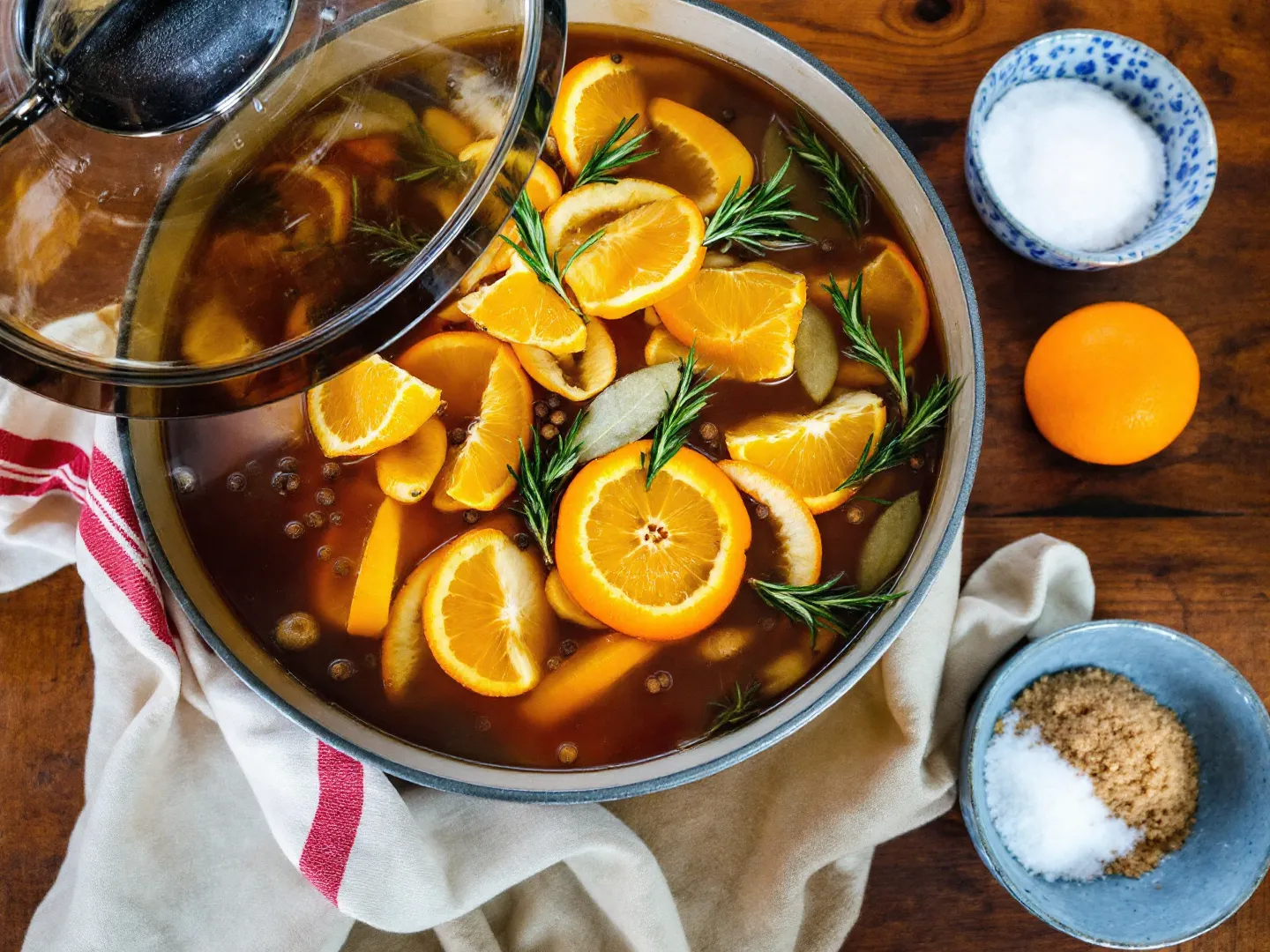
Salt, brown sugar and orange, a bag in a cooler packed with ice, and a long cold night of waiting. The turkey that comes out is the one your family is still talking about next November.
The short version
Dissolve salt, brown sugar and aromatics in 2 quarts of hot water, cool it with cold water and ice, and submerge a 12- to 16-pound turkey for 12 to 18 hours below 40°F. Pat it dry, let it air-dry in the fridge overnight, then roast; keeping it cold the whole time is the part you can't skip.
What makes ours better
why ours wins the argument at dinner
-
Measure the salt for the brand you own. A cup of Diamond Crystal weighs about half what a cup of Morton does, so the same cup can mean a mild brine or a ham. The amounts here are matched by weight, so pick your box and use its line.
-
Make a hot concentrate, then cool it with ice. Heating only 2 quarts dissolves the salt and pulls flavor from the aromatics in minutes, and a measured amount of ice brings the whole batch down to fridge temperature right away instead of hours later.
-
Brine in a bag inside a cooler. A brining bag hugs the bird, so 2 gallons covers it, and a cooler with frozen water bottles holds it under 40°F without taking over the fridge or watering down the brine.
-
Air-dry it overnight after the brine. A brined bird comes out waterlogged on the surface, and wet skin steams instead of crisping. A night uncovered in the fridge gets you back the bronzed, crackly skin a dry brine is known for.
What you need
the stars of the show
- Whole turkey1
- Packed light brown sugar1 cup
- Oranges2
- Garlic1 head
- Bay leaves4
- Fresh thyme6 sprigs
- Fresh rosemary4 sprigs
tap each one as it goes in. no double-salting.
Steps
go slow. the good part can’t be rushed.
-
Check the bird
Read the label. If it says kosher, self-basting, "enhanced" or "contains up to x% solution", it's already salted; skip the brine and go straight to drying it overnight. Otherwise make sure it's fully thawed (the cavity shouldn't have ice crystals), pull out the neck and giblets, and keep it in the fridge while you make the brine.
Brining a pre-salted bird is the most common way to end up with turkey that tastes like ham.
-
Make the hot concentrate
Put the 2 quarts of water, salt and brown sugar in a large pot. Squeeze the juice from the peeled oranges into the pot and drop in the peel, garlic, peppercorns, bay leaves, thyme and rosemary. Bring it to a simmer over high heat, stirring, until the salt and sugar are fully dissolved and you can't feel grit on the bottom of the pot, about 5 minutes. Turn off the heat and let it steep for 10 minutes.
About 10 min. Cook mode has a timer for this step.
-
Cool it down
Pour the gallon of cold water into the pot (or into your bucket if the pot is too small), then add the ice and stir until it's mostly melted. Check it with a thermometer. It has to be 40°F or colder before the turkey goes in; if it isn't, refrigerate it or add a few frozen water bottles until it is.
Don't eyeball the ice. Extra ice is extra water, and extra water means a weaker brine.
-
Set up the container
Open a turkey brining bag (or two heavy-duty unscented trash bags, one inside the other) inside a cooler, a food-safe 5-gallon bucket or a stockpot that holds at least 16 quarts. Set the turkey in the bag breast side down and pour the brine over it, aromatics and all. Press out the air and twist or tie the bag closed so the bird sits fully under the liquid.
-
Keep it cold, 12 to 18 hours
Refrigerate the bucket or pot, or close the cooler and tuck 4 to 6 frozen water bottles or ice packs around the bag. Leave it for 12 to 18 hours, and no longer than 24. If you're using a cooler, check the brine with a thermometer every few hours and swap in fresh frozen bottles whenever it creeps toward 40°F.
A cooler in a warm kitchen won't hold. Keep it in the coolest spot you have, out of the sun.
-
Lift it out and dry it
Lift the turkey out of the bag over the cooler or sink, let the cavity drain, and throw the brine away. There's no need to rinse; pick off any peppercorns or herbs and blot the bird all over, inside and out, with paper towels until the skin feels tacky, not wet.
Rinsing a raw turkey in the sink sprays bacteria across the kitchen and takes out almost no salt. Damp paper towels do the job.
-
Air-dry overnight
Set the turkey breast up on a rack over a rimmed sheet pan and refrigerate it uncovered for 8 to 24 hours. The skin turns dry, tight and slightly translucent, which is what lets it brown and crisp in the oven. Short on time? Even 2 or 3 hours helps.
-
Roast without more salt
Roast it as in our dry-brined roast turkey (/roast-turkey), skipping the salt rub; pepper, butter and the aromatics in the cavity are all it needs. The sugar in the brine helps the skin brown faster, so if the breast is deep mahogany before the thighs are done, lay foil loosely over it. When you make gravy from the drippings, taste before adding any salt.
Good to know
read this before somebody asks for seconds
- When a dry brine is the better choice. If you care most about crisp skin, have little fridge space, or don't want 2 gallons of raw-turkey water on the porch, our dry-brined roast turkey (recipe) is simpler and browns better. A wet brine wins when you want the juiciest, most forgiving breast, or when the turkey is going on a smoker or grill where it may run long.
- Thaw first. A frozen turkey needs about a day in the fridge for every 4 to 5 pounds, and it has to be fully thawed before it goes into the brine.
- Bigger bird or bigger container? Keep the ratio and make more. Per gallon of total brine, use 1½ cups Diamond Crystal, about 1 cup Morton or ¾ cup table salt, and ½ cup brown sugar. Whatever the container, the bird has to stay fully covered.
- For a turkey breast, use half the recipe and brine it 4 to 6 hours.
- Storage. Make the brine up to 2 days ahead and refrigerate it covered; strain out the aromatics if it will sit more than a day. Never reuse brine that has held raw turkey.
Questions, answered
asked and answered at the kitchen counter
How long should I brine a 14-pound turkey?
12 to 18 hours in this brine, and no longer than 24. Past that the meat starts to turn spongy and cured. If your timing slips, take the bird out, pat it dry and keep it in the fridge until you're ready.
Do I need to rinse a turkey after brining?
No. Rinsing in the sink spreads raw-turkey splash around the kitchen and removes very little salt. Let it drain, pat it dry thoroughly, and air-dry it in the fridge if you have time.
Can I brine a Butterball, kosher or self-basting turkey?
No. Those birds are already salted or injected with a salt solution, and brining them again makes the meat too salty. Just pat them dry and give them a night uncovered in the fridge.
Is a wet brine or a dry brine better?
A wet brine makes juicier, more forgiving breast meat with a slightly firmer, deli-like bite. A dry brine takes less space, keeps the texture closer to plain roast turkey and gives crisper skin. Both season the bird all the way through.
Can I brine a turkey in a cooler?
Yes, as long as the brine stays at 40°F or colder the whole time. Start with brine that's already cold, keep the bird in a sealed bag, surround it with frozen water bottles or ice packs rather than loose ice, and check it with a thermometer every few hours.
Will brined turkey drippings make salty gravy?
They can. Brined drippings are saltier than plain ones, so make the gravy without salt and taste it at the end, or use part drippings and part unsalted stock.
From the table
Made it? Tell me everything. Especially if somebody said it was better than their mother’s. I’ll keep your secret.
Made it?
stars first, story second. I read every one.
Tap a star
- No reviews yet. Yours would be the first, and I’d read it twice.
Find it in
Published October 26, 2026.