Cooking guides / Kitchen basics
How to Cook Pasta (Salt, Timing and Al Dente)
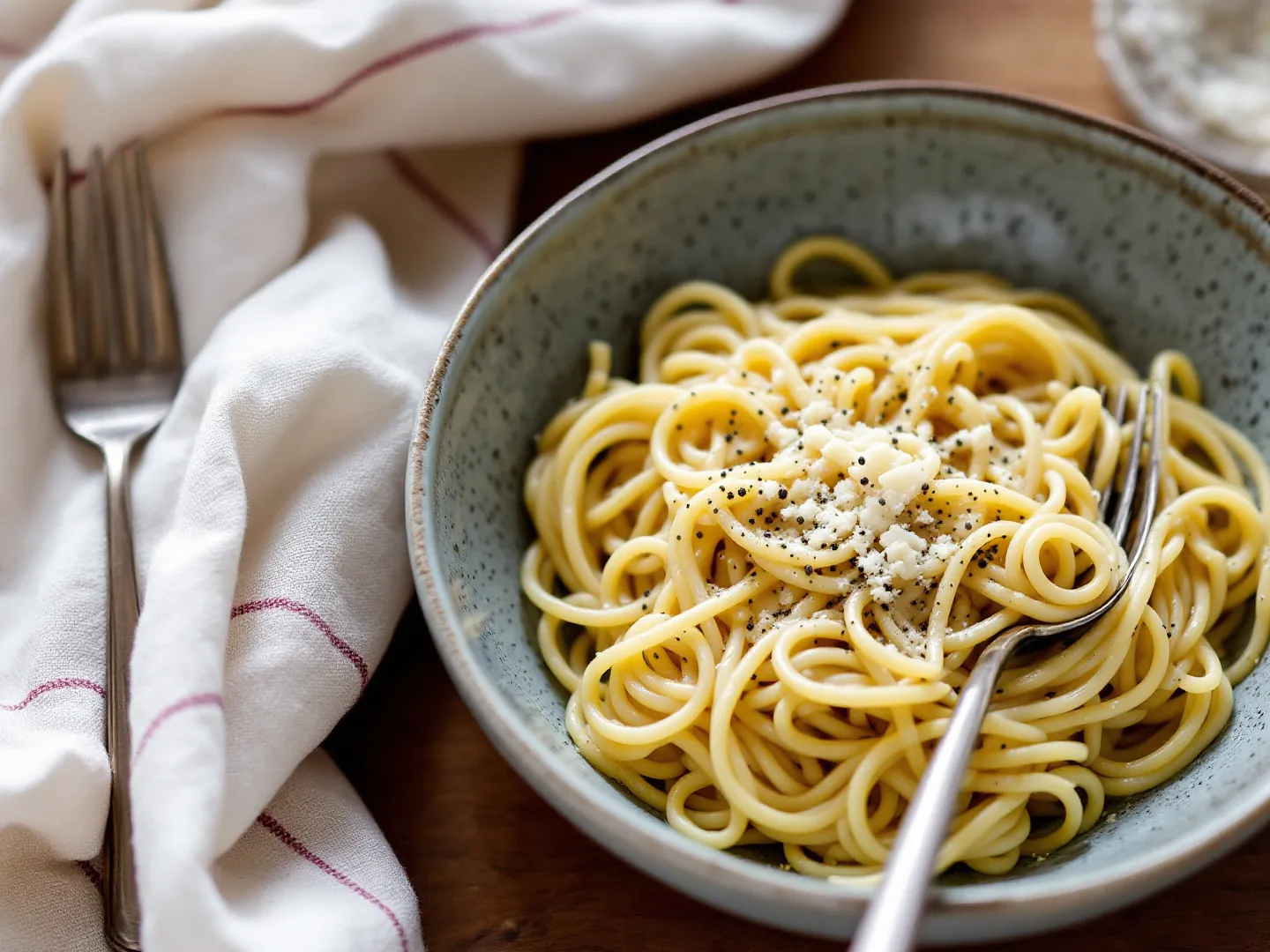
Everybody in the family thinks they cook pasta better than everybody else, and the arguments at Sunday dinner have lasted longer than some marriages. Here's how to win the next one quietly.
The short version
Boil about 4 quarts of water per pound, salt it with 2 tablespoons of coarse kosher salt, and stir in the first two minutes so nothing sticks. Start tasting 2 minutes before the package time and pull it while there's still a little bite. Save a mug of the cooking water, drain, and finish the pasta in the sauce for a minute with a splash of that water.
Water and salt
Pasta needs room to move and water that comes back to a boil fast. Four quarts per pound is the classic amount and never fails. If your pot is smaller, 3 quarts works fine as long as you stir often in the first two minutes, when the starch on the outside is sticky. Less water also makes the leftover water starchier, which is good for sauce.
Salt is the only chance you get to season the noodle itself. Aim for water about as salty as a well-seasoned soup, roughly 1 percent. "Salty as the sea" is about three times too much. Add the salt once the water is boiling; it dissolves faster and won't pit a stainless pot.
Water and salt at a glance
| Pasta | Water | Coarse kosher salt | Fine table salt |
|---|---|---|---|
| 1/2 pound | 2 to 3 quarts | 1 tablespoon | 1 1/2 teaspoons |
| 1 pound | 4 quarts | 2 tablespoons | 1 tablespoon |
| 2 pounds | 6 to 8 quarts | 3 to 4 tablespoons | 1 1/2 to 2 tablespoons |
How to cook pasta, step by step
- Bring the water to a full rolling boil, covered so it gets there faster. Then add the salt.
- Add the pasta all at once. For long noodles, let the ends soften for 30 seconds, then push them under with a spoon.
- Stir right away and again every minute or two. Keep the heat high so it stays at a steady boil, but uncovered so it doesn't foam over.
- Start tasting 2 minutes before the package says it's done. Bite a piece. It should be tender outside with a firm, slightly chewy center and no chalky crunch.
- Before draining, dip a mug into the pot and save about 1 cup of the cloudy water. Set it next to the stove where you can't pour it down the sink by accident.
- Drain the pasta but don't shake it bone-dry, and don't rinse it. Get it into the sauce within a minute.
What al dente looks like
Al dente means it has a little bite when you chew it. Cut a piece of penne or snap a strand of spaghetti: you should see a faint, thin white line or dot in the very center. That's the stage to pull it if you're finishing it in the sauce. If you're just topping it with sauce at the table, give it one more minute until the dot is nearly gone.
Package times are a starting point, not a promise. Shape, brand, altitude and how hard your water boils all change it. Your teeth are the timer.
Finishing in the sauce
This is the step that makes restaurant pasta taste different. Have your sauce hot in a wide skillet. Add the drained pasta, splash in 1/4 cup of the saved water, and toss over medium heat for 1 to 2 minutes. The starch in the water binds the fat and liquid into a glossy sauce that clings to every piece instead of pooling in the bowl. Add more water, a spoonful at a time, if it tightens up.
Butter and grated cheese go in off the heat at the end, so the cheese melts smooth instead of clumping. That's the whole trick behind cacio e pepe and spaghetti carbonara, which are just pasta, pasta water and a few things from the fridge. It works the same way for penne alla vodka, shrimp scampi with garlic butter and linguine and fettuccine alfredo, butter-and-parmesan style.
Myths worth dropping
- Oil in the water stops sticking. It mostly floats on top, and what reaches the pasta makes sauce slide off. Stirring stops sticking.
- Rinse pasta after draining. Only for cold pasta salad or noodles you won't sauce right away. For hot dishes, rinsing washes off the starch that helps sauce hold on.
- Throw it at the wall. If it sticks, it's overcooked. Taste instead.
- Fresh pasta cooks like dried. Fresh pasta is done in 2 to 4 minutes. Watch it closely.
Common mistakes
- A crowded pot. Too little water drops below a boil when the pasta goes in, and the noodles glue together.
- Forgetting the salt. No sauce can fix bland pasta afterward.
- Letting drained pasta sit. It sticks into a brick in about 3 minutes. Have the sauce ready before you drain.
- Overcooking pasta for a baked dish. For baked ziti with ricotta and three cheeses or lasagna, pull it 2 minutes early; it finishes in the oven.
Questions, answered
How much salt do you put in pasta water?
About 2 tablespoons of coarse kosher salt, or 1 tablespoon of fine table salt, per 4 quarts of water for 1 pound of pasta.
Should you rinse pasta after cooking?
Not for hot dishes. Rinse only for cold pasta salads or noodles you're holding to use later.
How long do you cook pasta?
Most dried pasta takes 8 to 12 minutes, fresh takes 2 to 4. Start tasting 2 minutes before the package time.
Why do you save pasta water?
The starch in it thickens and binds your sauce so it coats the noodles. A splash while you toss pasta and sauce together makes it glossy and smooth.
Published November 9, 2026.