How to Fix Gravy (Lumpy, Thin, Thick, Greasy or Salty)
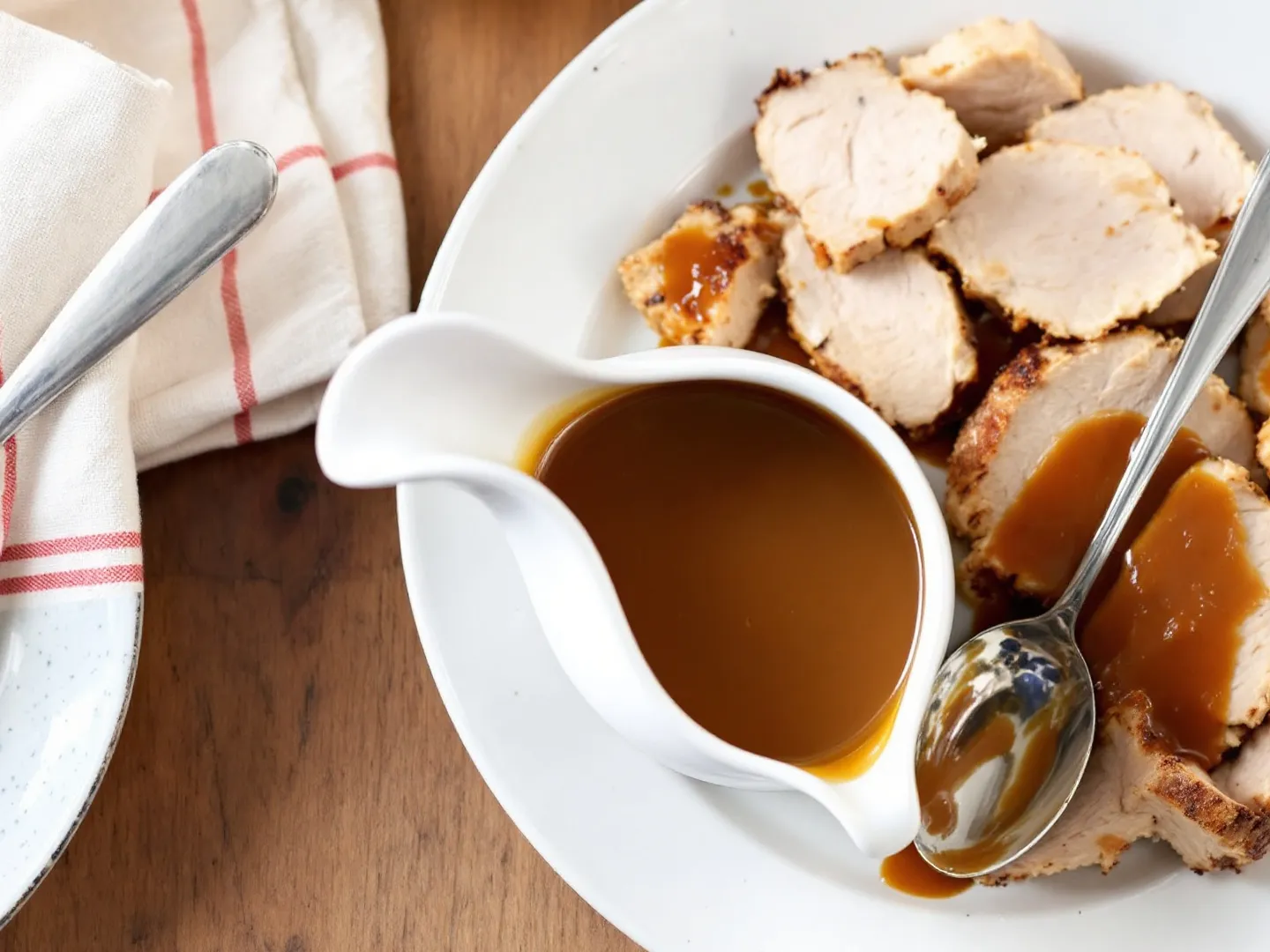
Gravy waits until the whole family is seated, then goes lumpy while Cousin Tina leans over the stove to ask if it's supposed to look like that. Almost every gravy problem has a fix, and most take less time than the argument about who carves.
The short version
Lumpy gravy gets whisked hard, strained or blended. Thin gravy gets a cornstarch slurry or a little flour-butter paste and a minute of simmering; thick gravy gets warm stock. Skim off grease, add umami for bland gravy, dilute salty gravy with unsalted stock, and next year make it ahead.
The quick-fix chart
Find the problem, do the fix, then taste again before you do anything else. Keep a quart of warm, unsalted or low-sodium stock on the stove. It solves half of these by itself.
| Problem | Quick fix | Why it happened |
|---|---|---|
| Lumpy | Whisk hard off the heat, then strain or blend | Flour hit hot liquid without fat around it |
| Thin | Cornstarch slurry or beurre manié, then simmer | Too little thickener or not simmered long enough |
| Too thick | Whisk in warm stock, 1/4 cup at a time | Too much flour or it sat and set |
| Greasy | Skim, or use a fat separator | Too much fat from the drippings |
| Bland | Reduce it, or add soy sauce, Worcestershire or drippings | Weak stock or underseasoned |
| Salty | Add unsalted stock and thicken again, or a splash of cream | Salty drippings or reduced store-bought stock |
| Pale | Darker roux next time; now, a few drops of soy sauce or browned onions | Roux cooked too briefly or no roasted bits |
| Broken or separated | Whisk in a splash of hot stock, or blend | Too much fat for the flour to hold |
Lumpy gravy
Pull the pan off the heat and whisk hard, getting into the corners, for 30 seconds. Small lumps usually give up. If they don't, pour the gravy through a fine-mesh strainer into a clean pot and press the lumps through with a spoon, or blend it smooth with an immersion blender right in the pan. Bring it back to a simmer before serving.
Next time: Cook the flour in the fat first (a roux), then add warm liquid a ladle at a time while whisking, letting each addition smooth out before the next. Or shake flour and cold water together in a sealed jar until smooth before adding it.
Thin gravy
First make sure it has simmered for at least 3 to 5 minutes. Flour doesn't thicken all the way until it bubbles, and gravy also thickens as it cools on the plate.
Still thin? Use one of these:
- Cornstarch slurry, fastest. Stir 1 tablespoon cornstarch into 2 tablespoons cold water for every 2 cups of gravy. Whisk it into the simmering gravy and simmer 1 minute, until glossy.
- Beurre manié, richest. Mash 1 tablespoon soft butter with 1 tablespoon flour. Whisk in small bits and simmer 3 to 5 minutes after each, until it coats a spoon.
- Reduce it. If it's thin but well seasoned and not too salty, simmer it uncovered in a wide pan. Five minutes makes a difference.
- Instant flour. The granular, quick-mixing flour sold for gravy can be whisked straight into hot gravy without lumping. Add a teaspoon at a time.
Too thick, greasy or broken
Too thick: Whisk in warm stock, a few tablespoons at a time, until it pours like heavy cream. Avoid plain water; it thins the flavor along with the texture. Gravy that has been sitting will set up again, so loosen it just before serving.
Greasy: Tilt the pan and spoon off the fat pooling on top. A fat separator (a cup with a spout at the bottom) makes it easy: pour the drippings in, let them settle a minute, and pour off the juices from under the fat. Paper towel laid on the surface and lifted off picks up the last film. A good rule is about 1 tablespoon of fat for each tablespoon of flour; anything beyond that floats.
Broken (fat sitting in puddles): Whisk in a splash of hot stock, or give it a few seconds with an immersion blender. If there's far too much fat, skim the extra first.
Bland, salty or pale gravy
Bland: Simmer it to concentrate the flavor. Then add savory depth in small amounts: a teaspoon of soy sauce or Worcestershire, a spoonful of skimmed pan drippings, a pinch of dried thyme or sage, or a splash of sherry or dry white wine simmered for 2 minutes. Season with salt and plenty of black pepper last. A small squeeze of lemon can wake it up.
Salty: The only real fix is dilution. Add unsalted stock or water, then thicken again with a little slurry. A splash of cream also softens the edge. The old trick of simmering a raw potato in it doesn't do much; it absorbs salty liquid, not just salt. To prevent it, use low-sodium stock and taste the drippings before adding them, especially from a brined or dry-brined turkey.
Pale: Next time, cook the roux to the color of peanut butter, and roast the bones or wings until deep brown before making stock. Right now, a teaspoon of soy sauce darkens it, and so do a few spoonfuls of deeply browned onions, blended in.
How to make gravy ahead
- A day or two ahead, or weeks ahead if you'll freeze it, roast 3 to 4 pounds of turkey wings or necks with a chopped onion, carrot and celery at 425°F until deep brown, about an hour. That's where the roasted flavor comes from.
- Simmer them with 10 cups of water or low-sodium stock for 1 to 2 hours, then strain. You want about 8 cups.
- Make a roux with 1/2 cup each of butter and flour, cooked to the color of peanut butter, then whisk in 6 cups of the stock. Simmer until it coats a spoon. That makes about 6 cups.
- Cool it quickly and cover it. Gravy made ahead from fresh stock keeps up to 3 days in the fridge; leftover gravy from the meal, 1 to 2 days. Either freezes for up to 3 months.
- On the day, reheat it over medium heat, whisking, and bring it to a boil. Whisk in the skimmed turkey drippings and scrape the roasting pan with a little hot stock to add those browned bits. Adjust thickness and salt.
Common mistakes
- Adding flour straight to hot liquid. Instant lumps. Mix it with fat or cold liquid first.
- Thickening before it simmers. It thickens as it bubbles; give it a few minutes before reaching for more starch.
- Salting the drippings blind. Drippings from a brined bird can be very salty. Taste first.
- Using all the fat in the pan. Measure what you need for the roux and pour the rest off.
- Making it last. The gravy is the most rushed job of the meal. Make it ahead and just finish it at dinner.
Questions, answered
How do you fix gravy that is too thin?
Make sure it has simmered a few minutes, then whisk in a cornstarch slurry (1 tablespoon cornstarch in 2 tablespoons cold water per 2 cups) and simmer 1 minute.
How do you get lumps out of gravy?
Whisk hard off the heat. If lumps remain, strain it through a fine-mesh sieve or blend it with an immersion blender, then reheat.
How do you fix salty gravy?
Dilute it with unsalted stock or water and thicken again with a little cornstarch slurry. Cream helps soften the salt. Raw potato doesn't work well.
How far ahead can I make gravy?
Gravy made ahead from fresh stock keeps up to 3 days in the fridge. Leftover gravy from the meal is best within 1 to 2 days. Either freezes for up to 3 months. Reheat to a rolling boil, whisking, and stir in fresh drippings on the day.
Why does my gravy taste like flour?
The flour wasn't cooked long enough. Simmer the gravy for 5 more minutes, and next time cook the roux until it smells toasty before adding liquid.
Published November 9, 2026.